
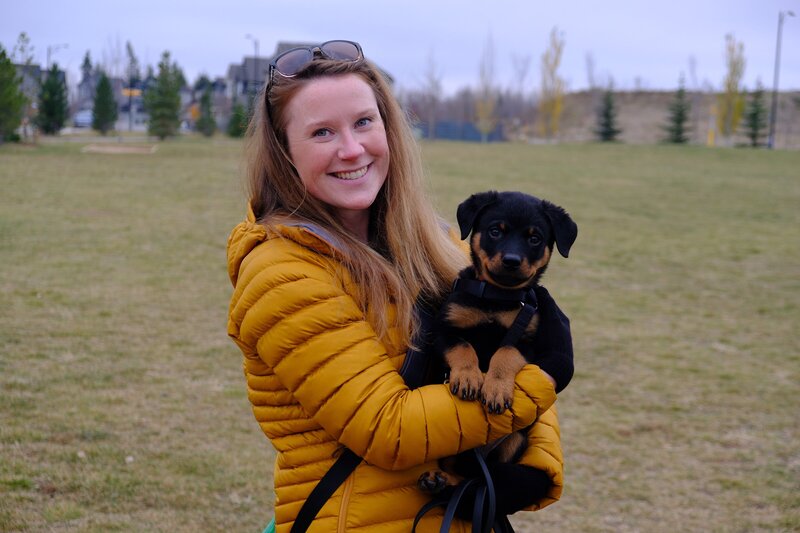

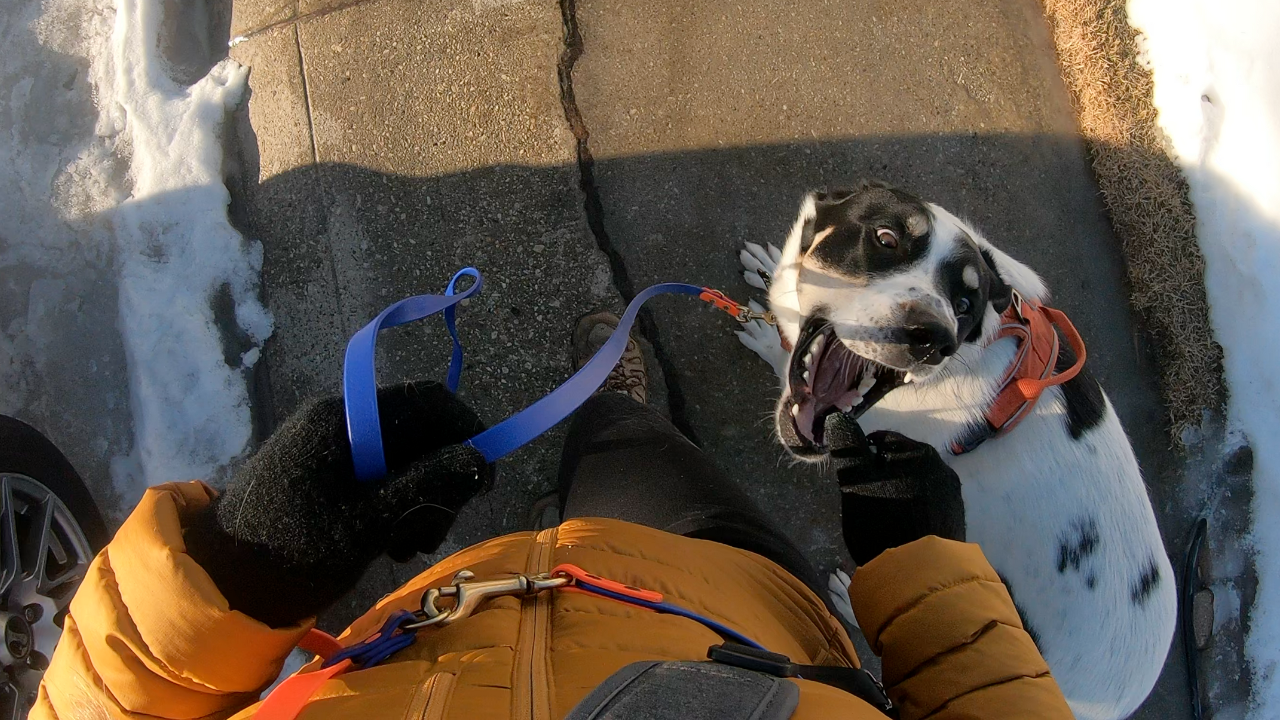


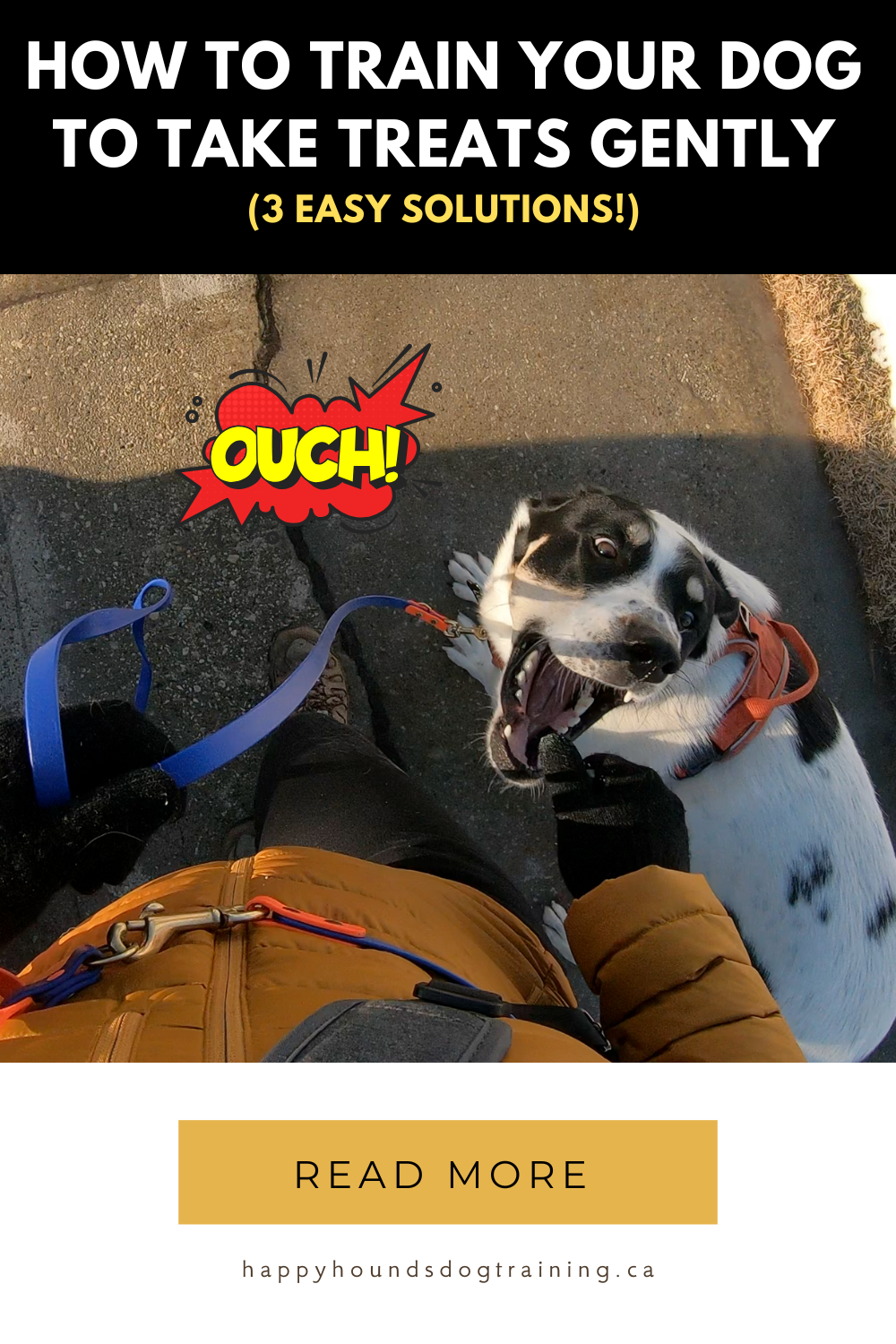
If your dog takes treats too roughly, you know just how painful—and stressful—it can be. As a professional dog trainer, I’ve worked with countless dogs who snatched treats so hard I’ve almost hesitated to reward them at all.
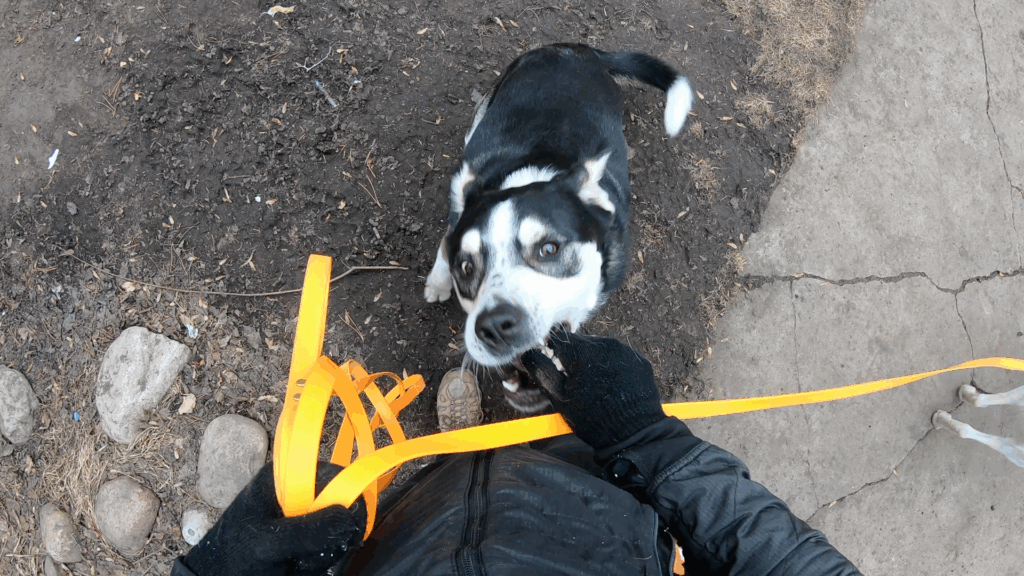
Judging by my YouTube comments, I’m far from alone. I get asked about painful treat-taking all the time, which tells me just how many people are struggling with this exact issue.
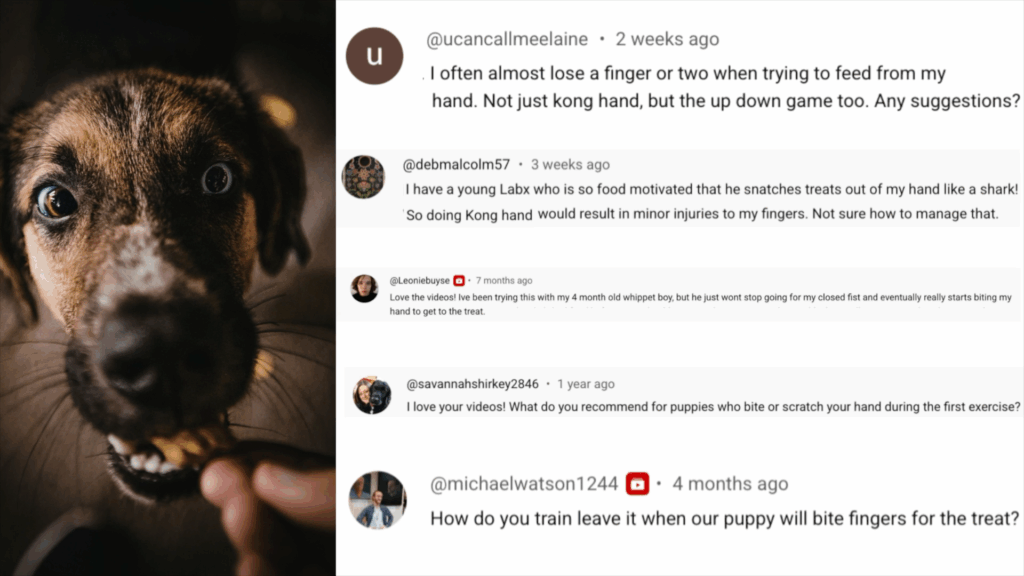
The good news? You don’t have to live with sore fingers. There are practical solutions you can start using today to train your dog to take treats more gently.
In this blog post, I’ll cover three solutions for rough treat-taking that I personally use all the time:
- Two are immediate fixes that don’t require any training
- One is a longer-term training method that teaches your dog to take treats gently
👉Video version: For those who prefer visual demonstrations, I also have a video version of this information. Watch here: How to Train Your Dog to Take Treats Gently (3 Easy Fixes!)
Why Common Advice for Rough Treat-Taking Can Backfire:
One tip you’ll often see online is to “feed them like a horse” by offering treats on a flat palm.
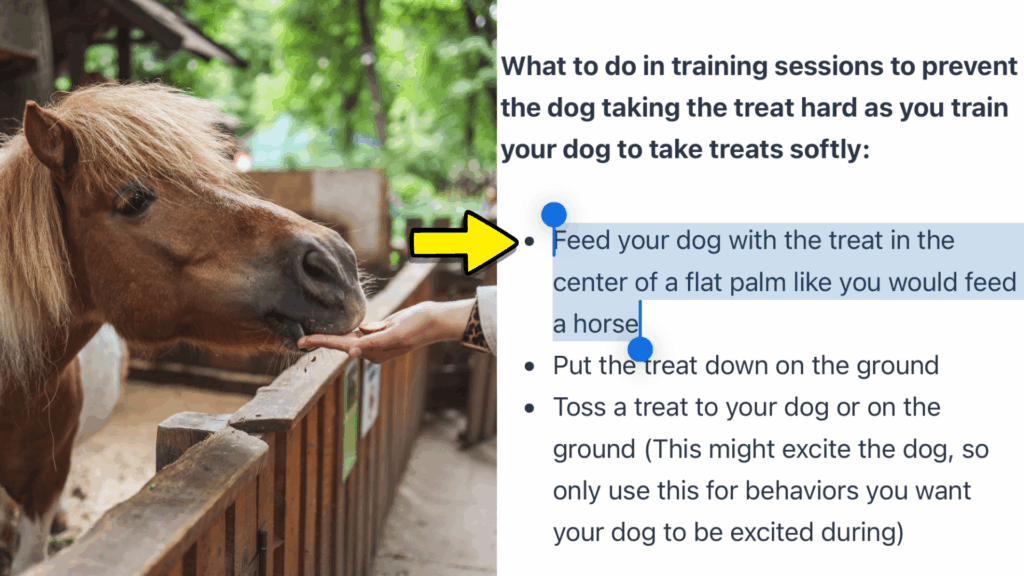
At first glance, this seems logical. After all, horses take treats from your hand without biting, right? I’ll admit, I was excited to try it with my dog clients, but my experience wasn’t ideal.
This approach can work great in certain situations, such as training indoor skills where you can extend your arm forwards towards your dog.
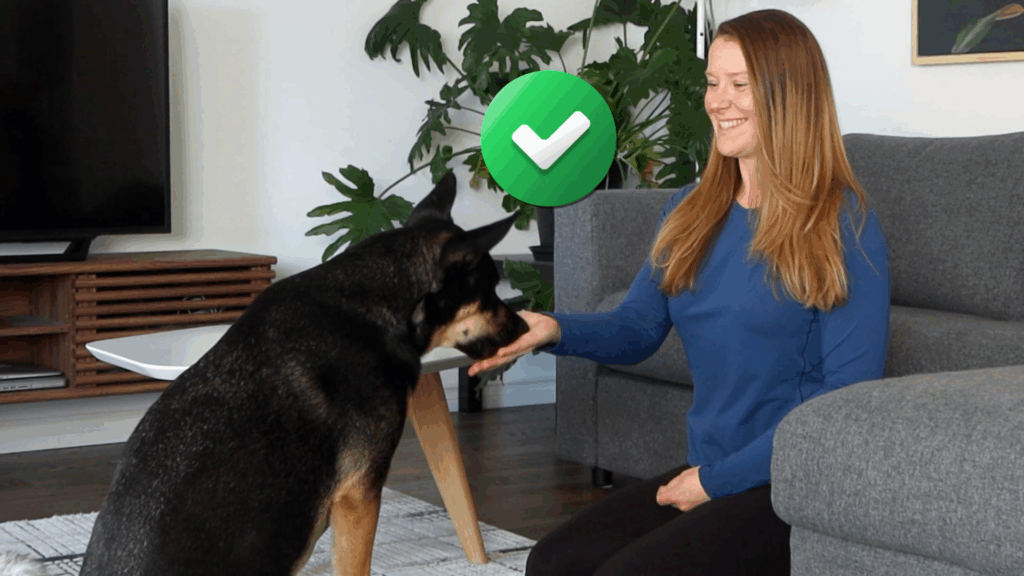
It can also work well with smaller dogs (that have smaller mouths).
However, I didn’t find that it worked well on leash walks.
Keeping your hand perfectly flat while walking is tricky, especially without dropping the treat. And if your hand is cupped even slightly, it can give your dog the chance to chomp on the sensitive skin in your palm. From personal experience, I found this even more painful than finger biting!
Since dogs are more likely to take treats roughly on walks (more on why in a moment), this method wasn’t very helpful for me.
Bottom line: While a flat-hand approach might work in specific situations, it’s not my go-to strategy for dogs that take treats too roughly.
So what do I suggest instead?
First, let’s talk about two great alternatives to handing treats right from your hand. These can provide immediate relief while you also work on training your dog to take treats gently.
Immediate Fix for Rough Treat-Taking #1: Silicone Squeeze Tubes
A simple, safe alternative is using a silicone squeeze tube. Instead of offering dry treats, you can give your dog a quick lick of food from the tube.
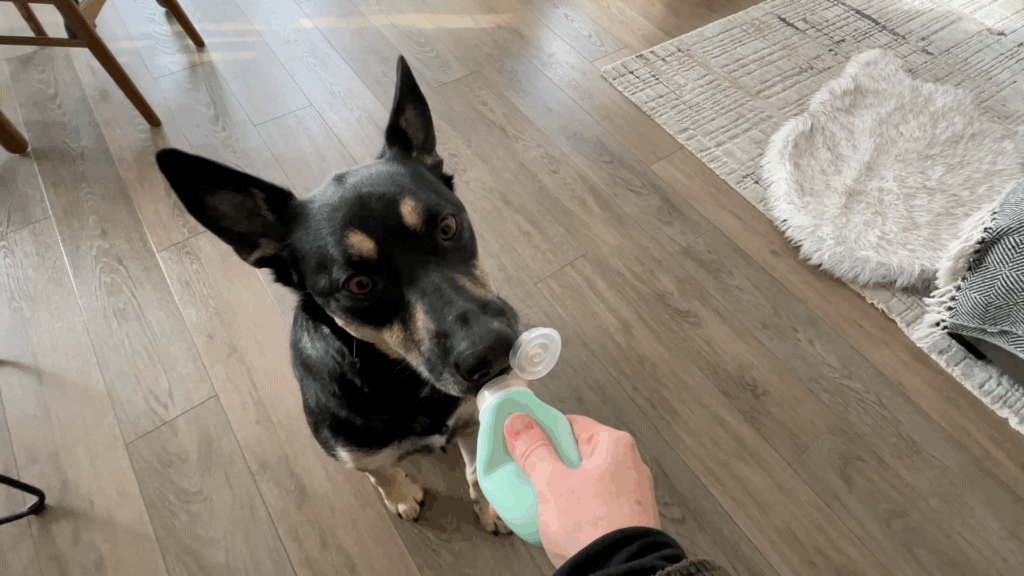
More reasons why I love using squeeze tubes during dog training:
- Cost-effective – Using canned dog food thinned with water works beautifully, and one can goes a long way. This often ends up being cheaper than traditional dog treats!
- Winter-friendly – Squeeze tubes are perfect for cold-weather walks because you can keep your gloves on and your hands warm.
- Balanced nutrition – Most canned dog foods are nutritionally complete, so you can count rewards as part of your dog’s overall food intake. This is perfect for training without overfeeding.
For dogs who are particularly enthusiastic or rough, this option eliminates finger injuries while still rewarding good behaviour.
Immediate Fix for Rough Treat-Taking #2: Long Spoon & Silicone Pouch
Another great option, especially for short dogs or people with mobility limitations, is using a long-handled spoon and a silicone pouch filled with soft food. Simply dip the spoon and offer a lick without putting your fingers near your dog’s mouth.
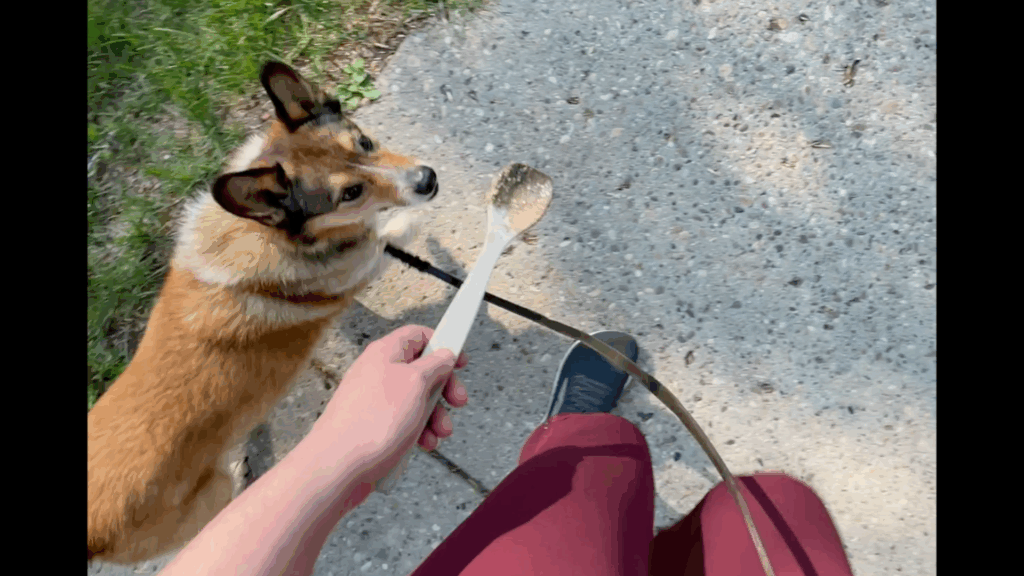
Both this method and squeeze tubes can be used as long-term management solutions if your dog takes treats painfully. However, I do also suggest teaching your dog to take treats more nicely!
How to Train Your Dog to Take Treats Gently:
When I train a dog to “Leave It!“, I typically begin with un-cued impulse control as the first step. The goal is for the dog to learn—without any verbal cues—that pausing and waiting (rather than grabbing) is what makes the reward happen.
Over time, I noticed something interesting: dogs that learned impulse control this way also began taking treats much more gently. Instead of going from 0 to 100 when they saw food, they slowed down—and softer mouths naturally followed.
👉 Video tutorial: How to Train Your Dog to LEAVE IT in 5 Easy Steps
Here’s how to do this training with your dog:
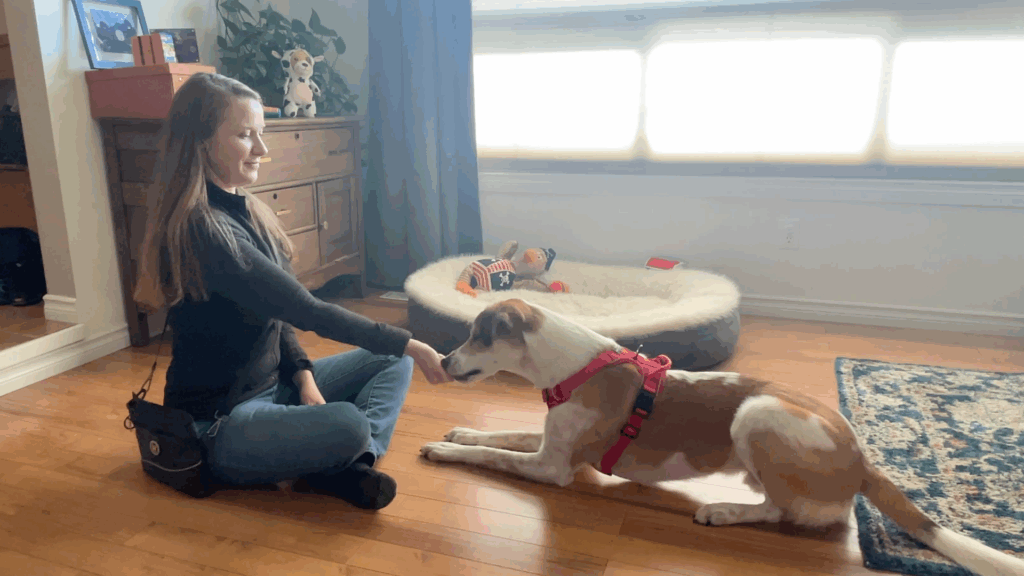
- Hold a treat in your closed fist and present it to your dog. Your dog may paw, lick, or nibble at your hand. Hold your hand steady.
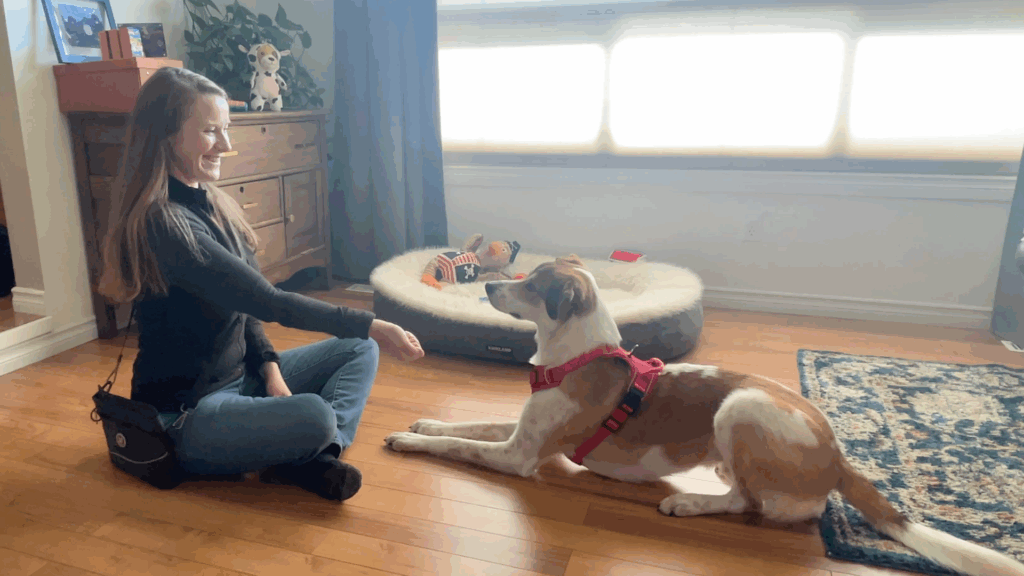
2. The moment your dog pauses or backs away, mark the behaviour with “yes” and give the treat!
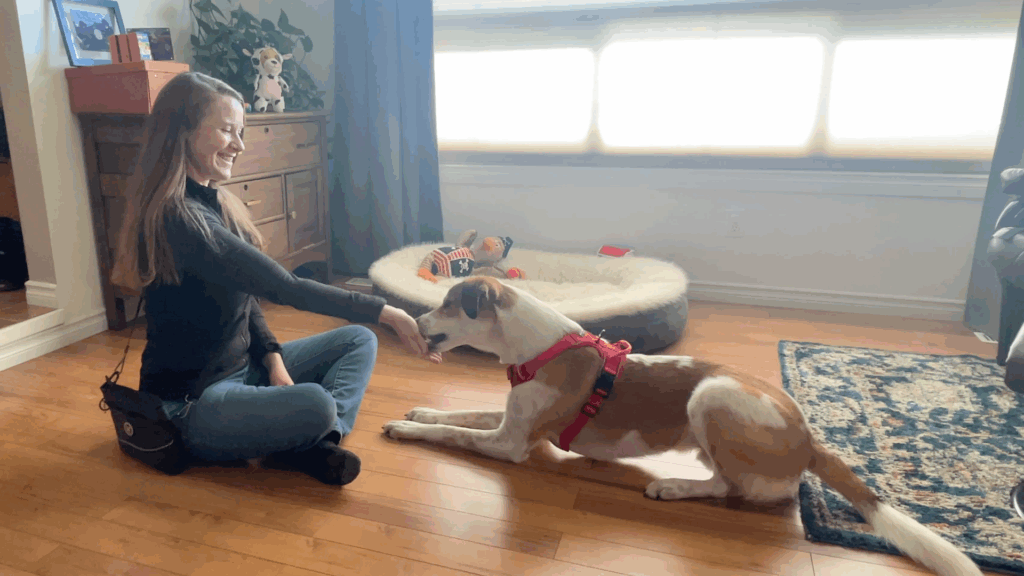
However, as you can imagine if your dog takes treats roughly, this might hurt!
I have two important tips:
- Don’t be a hero! Wear gloves during this training if you need to.
- Begin with low-value treats. Start with something boring to your dog such as spinach or lettuce. Because your dog won’t care as much about it, they are less likely to mouth your hand aggressively. Once your dog is consistently able to ignore that item, then work up to higher-value treats.
With consistency, dogs trained this way tend to take treats more slowly and gently.
Why Dogs Take Treats Roughly:
Sometimes rough treat-taking isn’t just a manners issue—it’s a stimulation issue.
Often, when dogs get too stimulated on walks or during training sessions, they start to grab treats more painfully.
If your dog takes treats nicely at home, but painfully on walks, I’d consider whether they’re close to their threshold.
👉 If you’re unfamiliar with the concept of dog threshold, I strongly encourage you to watch this video. Understanding your dog’s threshold will transform your training!
If you suspect overstimulation is making your dog take treats more roughly, here are two strategies to help calm your dog down:
- Treat scatter – Take a handful of small treats and toss them on the ground to encourage your dog to sniff and find them. Sniffing can help reduce stress.
- Up-and-down pattern game – I frequently use this game by Leslie McDevitt on walks to help clients relax. Simply drop a treat on the ground for your dog to get, wait for them to look back up at you, say your marker word, then drop another treat. This simple, predictable pattern of reinforcement helps reset overstimulation.
By addressing both training and stimulation levels, you’ll see a noticeable improvement in how gently your dog takes treats.
Final Thoughts
Teaching your dog to take treats gently is a process. Using tools like squeeze tubes or long spoons protects your hands right away, while impulse control training builds lasting skills.
With patience, consistency, and the right approach, rewarding your dog can become safe, stress-free, and enjoyable again.
Happy training!
Disclosure: Happy Hounds uses affiliate links. Purchasing with these links will not cost you any extra, but I get commissions for purchases made through these links. Affiliate links help me to continue to offer free resources & blog posts. I would love if you used them!
How to Train Your Dog to Take Treats Gently
About the author:





+ show Comments
- Hide Comments
add a comment