


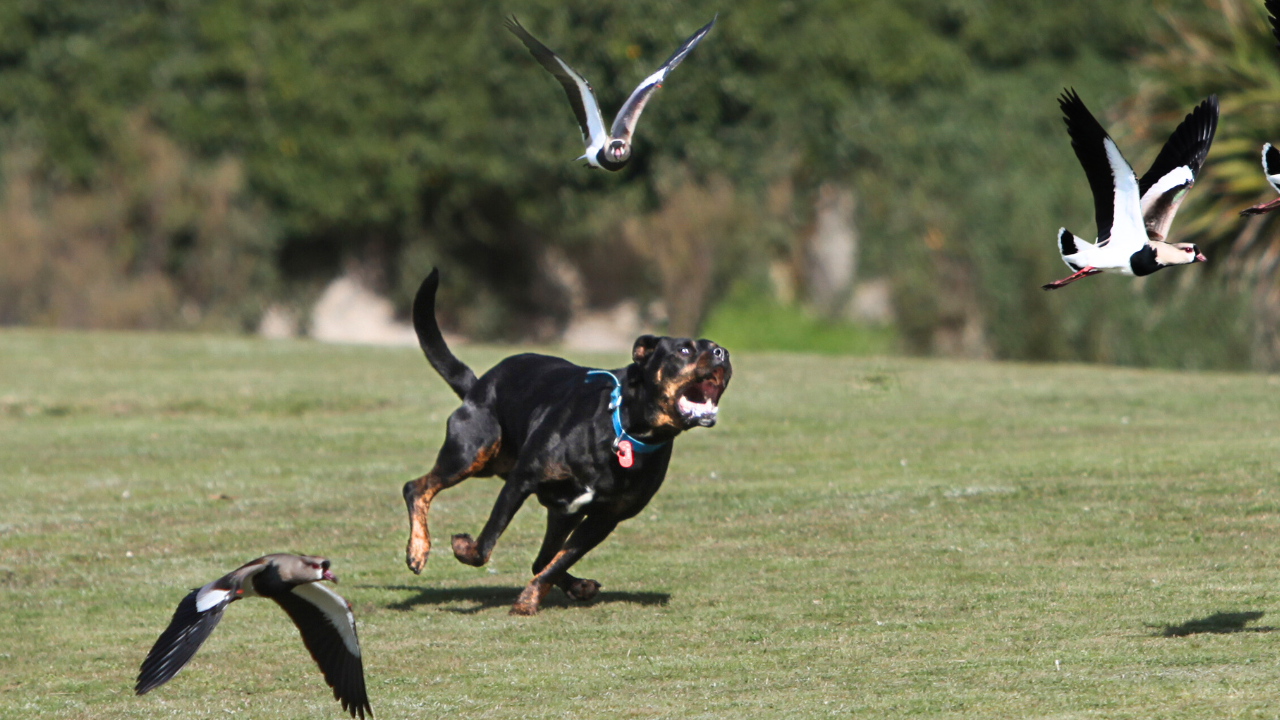



If your dog chases squirrels, birds, cats, or wildlife, you’re not alone. Animal chasing, or dog prey drive, is one of the most common behaviour struggles dog guardians face.
Many guardians treat dog prey drive like an obedience problem.
They think:
- I need to interrupt faster.
- My dog needs a stronger “leave it.”
- I just need better treats.
But prey drive isn’t “bad behaviour”. It’s an instinct sequence:
Why Do Dogs Chase Animals?

Search → Stalk → Chase → Grab → Kill → Dissect → Consume
These instincts exist because dogs descended from wolves.
Over generations, we selectively bred dogs to amplify different parts of this sequence for specific jobs such as:
- Sighthounds were bred to chase fast-moving prey.
- Herding dogs were bred to stalk and move livestock.
So when a dog chases squirrels, birds, or cats, they’re not being disobedient.
They’re expressing natural instincts.
The problem is that most modern dogs no longer have appropriate outlets for those instincts.
And when those instincts go unmet…
They don’t disappear.
They build.

👉 Video version: For those who prefer visual demonstrations, I also have a video version of this information. Watch here: Dog Prey Drive Training Won’t Work… Without THIS
Why Dog Prey Drive Instinct Fulfillment Matters
I first realized this while working with my own dog, Neirah.
She had extremely intense prey drive and would chase absolutely anything that moved.

At first, I tried solving it purely with training.
But over time I realized something important:
Training alone wasn’t enough.
When I started combining training with instinct fulfillment, the results improved dramatically.
By using replacement outlets — activities that mimic natural predatory behaviour — you can help safely satisfy your dog’s instincts.
When those instincts are fulfilled, your dog often has less desire to chase real animals.
➡ Really struggling with animal chasing? Grab my FREE dog prey drive guide for more help.
How to Safely Satisfy Your Dog’s Prey Drive
Think of your dog’s prey drive like a battery:
If it’s never safely drained, it stays fully charged.
Then, when your dog spots a squirrel… they’re more likely to explode into a chase.
By using the right replacement outlets, you can help drain that “prey drive battery” so that they have less desire to pursue real animals.
The key is choosing outlets that actually satisfy the instinct — not just distract your dog for a few minutes.
In this blog post, I’ll share three principles I use when choosing replacement outlets, along with links to some of my favourite ones.
1. Choose Outlets That Complete the Predatory Sequence
Many dog toys only satisfy a small part of the predatory sequence.
A dog might get to chase, but never grab. Or grab, but never dissect or consume.
When the sequence isn’t completed, the dog may stay unsatisfied.
One client’s hound would obsessively sniff for animals every time they went outside. After we added structured dig and consume games, the constant scenting for animals dropped dramatically.

That’s why I often look for outlets that allow the dog to finish the sequence.
Examples include:
- Toys that allow dogs to tear open fabric to access treats hidden inside
- Tossing treats during chase games so the dog can consume what they catch
- Dig pits where dogs can uncover edible rewards like bully sticks
When dogs get to complete the sequence safely, the activity becomes much more satisfying.
2. Realism Matters for Dog Prey Drive

Synthetic toys can be fun…
but they often lack the scent and texture that trigger natural predatory instincts.
Real fur, for example, can dramatically increase engagement.
When we’re working with strong instincts, the closer we get to realism, the more satisfying the activity tends to be.
Personally, I only use fur toys made from fur that is a byproduct of the meat industry and would otherwise be discarded. I do not support animals being killed solely for their fur.
Two of my favourite ethical fur toys for high prey drive dogs are:
- Sheep Bungee Chaser: A fantastic chase toy made with fluffy, real fur.
- Rabbit Pocket Squeaker: Small, portable, and perfect as a functional reward on walks.
However, when we’re trying to satisfy predatory instincts, realism can significantly improve results.
3. Use Functional Rewards During Prey Drive Training
For positive reinforcement to work, the reward needs to be something the dog actually wants in that moment.
Treats work well in many situations.
But when prey drive is activated, food may not be powerful enough — especially early in training.
This is where functional rewards become incredibly valuable.
A functional reward is something that directly satisfies the dog’s need in that moment. For example:
If you’re practicing recall next to a river on a hot day, releasing your dog to swim may be far more rewarding than giving a biscuit.

With prey drive training, functional rewards might include:
- structured chase games
- tug with a fur toy
- toys that allow dogs to dissect and access food inside
Instead of simply rewarding disengagement from prey with a treat, you reward the dog with something that satisfies the instinct itself.
When I switched to using functional rewards with my own dog Neirah, the improvement in training results was dramatic.
Why Replacement Outlets Alone Aren’t Enough
Replacement outlets help — but they’re only one piece of solving prey drive.
Outlets reduce the urge to chase…
But dogs still need to learn what to do when they see an animal.

In my Stop Chasing training guide, I walk through the full system I use with clients to teach dogs to:
- How to combine fulfillment and training effectively
- Notice animals without exploding into a chase
- Disengage voluntarily
- Build calm behavior around wildlife, cats, and other moving animals
The goal of this program is simple:
Your dog spots an animal…
…and calmly chooses not to chase it.
Final Thoughts
Animal chasing can feel incredibly frustrating.
But when you combine:
- instinct fulfillment
- structured training
- and the right rewards
You’ll see dramatic improvements.
Happy training!

Disclosure: Happy Hounds uses affiliate links. Purchasing with these links will not cost you any extra, but I get commissions for purchases made through these links. Affiliate links help me to continue to offer free resources & blog posts. I would love if you used them!
How to Stop Your Dog’s Animal Chasing (Dog Prey Drive)
About the author:







+ show Comments
- Hide Comments
add a comment