




The Real-Life Guide to Loose Leash Walking (Even Around Distractions):
If you want to be able to enjoy stress-free leash walks with your dog in busy environments, this guide will walk you through exactly what it takes to get there.
Imagine being able to take your dog anywhere and enjoy calm, loose leash walks together. That’s the goal—and it’s absolutely achievable with the right approach.
This post is based on a video I shared on my YouTube channel, where I took you along on a real, uncut walk in a busy area. It’s a full dog walk featuring bikes, strollers, pedestrians, off-leash dogs, noise, and real-world unpredictability.
Throughout the walk, I explain my decisions in real time and break down the key training principles behind what’s happening, so you can apply them to your own walks.
I do strongly recommend watching the video alongside this post and using this page as a summary and resource hub for everything discussed.
Video version: Real, UNCUT Dog Walk in a Busy Area (Loose Leash Walking in Real Life)
The Real-Life Guide to Loose Leash Walking (Even Around Distractions)
Table of Contents:
- Does Reward-Based Dog Training Work in Real Life With Distractions?
- How to Get Your Dog’s Attention on Walks (Engagement Training Explained)
- Should You Let Your Dog Sniff on Walks? (How Sniffing Affects Loose Leash Walking)
- Sound Conditioning for Dogs in Real Life Environments
- How Dog Threshold Impacts Training Results
- Why “Leave It” Is One of the Most Important Safety Skills for Dogs
- How to Stop Your Dog from Chasing Animals
- Does Your Dog Actually Want to Greet Other Dogs? (Dog Social Styles Explained)
- Should You Let Your Dog Greet Other Dogs on Leash? My 4 Rules
- Loose Leash Walking vs Heel: What’s the Difference in Dog Training?
- Why Your Dog’s Leash Training Falls Apart Outside (Skill vs Environment Mismatch)
1. Does Reward-Based Dog Training Work in Real Life With Distractions?
A common concern with reward-based dog training is the idea of “competing reinforcers”—the belief that food has to compete with the environment in order to work.
This is a really common way of thinking about training, but it’s slightly backwards.
I often compare it to trying to use a vacuum cleaner upside down and then faulting it for not cleaning your floors!
If the environment feels “more valuable” than food to the dog, it usually means the dog is too stimulated (or over threshold, which we’ll talk more about in section 5). In that state, learning and decision-making are already impaired, so training won’t be effective.
That’s not a failure of reward-based dog training. It’s a setup issue.
The goal is not to “outcompete” the environment with food. If you approach training that way, it can easily turn into bribery—trying to lure or persuade a dog to behave in situations they don’t yet have the skills for.
Instead, effective reward-based training works by building behaviour first in low-distraction environments, where the dog can succeed, and then gradually increasing difficulty so those same skills hold up in the real world.
Treats aren’t meant to override the environment. They’re meant to reinforce behaviours the dog is already capable of offering in that moment.
Key takeaway: If reinforcement isn’t working, it’s usually because the environment is too difficult for the dog’s current skill level.
2. How to Get Your Dog’s Attention on Walks (Engagement Training Explained)
Engagement is one of the most important—and most overlooked—leash skills.
When I talk about engagement, I mean a dog who is mentally “with you” while still being able to experience the environment. Not a dog that is glued to you, but one that is aware of you, responsive when needed, and able to check back in even when there’s a lot happening around them.
In practical terms, dog engagement looks like:
- Your dog is mentally present enough to respond when needed
- They can offer attention voluntarily, without constant prompting
- They are aware of you and your position in the environment
If your dog seems to ignore you outside, improving engagement is often the fastest way to improve overall leash behaviour. In most cases, it’s not an obedience issue—it’s a breakdown in connection under distraction.
Some simple ways to start building engagement include:
- Rewarding voluntary check-ins (your dog choosing to look back at you on their own). Video tutorial: Dog Ignores You on Walks? Try This 2-Second Fix for Better Engagement
- Practicing name response in gradually more stimulating environments. Video tutorial: The ONE Dog Training Game That Improves Engagement, Leash Walking, and Recall
- Reinforcing moments of natural connection rather than constantly asking for attention
It’s also important to remember that engagement is a two-way behaviour. If you want your dog to notice and respond to you, you also need to notice and reinforce the moments they offer behaviour you like—especially in busy environments where those moments are easy to miss.
Key takeaway: Engagement isn’t about demanding attention from your dog—it’s about reinforcing connection in all environments.
3. Should You Let Your Dog Sniff on Walks? (How Sniffing Affects Loose Leash Walking)
Sniffing is one of the most misunderstood parts of leash walking. A lot of people assume that good leash manners means a dog should walk without stopping or sniffing—but that’s not how dogs are designed to move through the world.
Sniffing isn’t a distraction or “bad behaviour.” Smell is a dog’s primary sense, and sniffing is how they gather information, decompress, and engage with their environment. In many cases, it actually helps them regulate their emotional state on walks.
So the goal is not to stop sniffing.
The goal is to prevent sniffing from being paired with pulling.
The key distinction is how your dog accesses the smell. If a dog pulls you toward a scent and then gets to investigate it, that pulling has just been reinforced. Over time, that creates a clear pattern: pulling becomes the “ticket” to access interesting parts of the environment. Instead, we want access to smells to happen when the leash is loose.
That difference is what shapes your loose leash walking over time.
Leash length plays a big role here. When a leash is too short, dogs often don’t have enough space to investigate naturally, which forces them to pull on leash to reach something interesting. That unintentionally teaches them that pulling works.
A slightly longer leash (around 6 feet or more in most cases) gives your dog more freedom to investigate naturally, while still keeping clear boundaries. It allows you to say: yes, you can go sniff—but only when there is no tension on the leash.
👉 Watch: Dog Pulls On Leash Towards Distractions & Ignores You? Try This!
Over time, this builds a really important pattern: walking without leash tension is what gets you access to sniffs.
Later in this guide, we’ll also talk about heel work and the situations where I don’t allow sniffing at all, so you can understand how both walking styles fit together in real-life training.
Key takeaway: Sniffing is not the problem—pulling into sniffing is. If you control when access happens (on a loose leash), you strengthen loose leash walking instead of weakening it.
4. Sound Conditioning for Dogs in Real Life Environments
Many dogs struggle with real-world sounds—traffic, sirens, skateboards, construction noise, or sudden environmental changes. In the uncut walk this guide is based on, you’ll actually see a real example of this when a siren passes by. For my own dog, loud or unexpected sounds can push her over threshold, where she may tuck her tail, panic, and try to move away. In that state, the sound isn’t being processed as neutral—it’s being experienced as a threat.
This is why it’s so important that we don’t ignore our dog’s emotional responses to sound, or punish them for how they act while scared. Those responses are information, not disobedience.
To support dogs in environments like this, I recommend gradual sound conditioning.
👉 Watch: Dog’s Scared of Thunder, Fireworks, or Other Noises? Try Sound Conditioning!
The goal of sound conditioning isn’t simply exposure—it’s changing how your dog feels about the sound. Especially if you live in busy or unpredictable environments, this can make a meaningful difference to your dog’s confidence on walks.
Sound conditioning works best when it’s layered gradually:
Start with sounds at a low enough intensity that your dog can still take food, respond to cues, and remain engaged. From there, you slowly build up difficulty over time, always making sure your dog stays under threshold.
Crucially, we also pair the sound with something positive—food or other rewards—so that the sound begins to predict good things happening. Over time, this creates a new emotional association: instead of “sound = stress,” your dog learns “sound = something good is about to happen.”
This is what actually shifts the emotional response, not just repeated exposure on its own.
Over repeated, positive experiences, the sound stops predicting stress and instead becomes part of the environment—something your dog can notice without needing to react to negatively.
Key takeaway: Sound conditioning only works when your dog is calm enough to learn. The goal is gradual positive association, not forced exposure.
5. How Dog Threshold Impacts Training Results
One of the biggest factors that determines whether leash training works in real life is something called a dog’s threshold.
A dog is “under threshold” when they are still able to think, process information, take food, and respond to cues. This is the state where learning can actually happen.
A dog is “over threshold” when their nervous system becomes too activated—through fear, excitement, stress, or overstimulation—and their ability to learn or respond breaks down.
👉 Watch: Is THIS Why Your Dog Training Isn’t Working? The Dog Threshold Mistake
A simple way to understand this is to imagine a doorway threshold. When you cross it, you move from one zone into another.
With dogs, that “doorway” represents a shift from being calm, aware, and able to learn… into a more reactive, instinct-driven state. Once a dog has crossed that line, they can no longer learn appropriately.
In the uncut walk this guide is based on, you’ll see how I actively monitor this throughout the environment. I check in with my dog before and during more intense moments like skateboards, loud noises, and busy areas.
When a dog goes over threshold, it often looks like:
- Ignoring cues they normally know
- Fixating on a distraction (dogs, people, animals, smells)
- Taking food too roughly or refusing food altogether
- Sudden barking or reactive behaviour
- “Checking out” mentally or seeming unreachable
This is where a lot of training confusion happens. People often assume the dog is being stubborn or “not trained enough,” when in reality the dog is simply no longer in a learning state.
This is also where reward-based training gets misunderstood. Food and rewards don’t stop working because the method is ineffective—they stop working because the dog has already crossed into a state where proper learning is no longer possible.
The key shift is this: training only works when the dog is under threshold enough to learn. Once they cross that line, the priority is not obedience—it’s helping the dog recover, create distance, or reduce environmental intensity so they can return to a learning state.
Over time, good leash training is really just the process of gradually expanding a dog’s threshold. We slowly increase the difficulty of the environment while making sure the dog can still succeed at each stage.
Key takeaway: A dog isn’t being disobedient when they’re over threshold—they’re simply too stimulated to learn or respond. Training only works when the dog is calm enough for their brain to process information.
6. Why “Leave It” Is One of the Most Important Safety Skills for Dogs
In my opinion as a professional dog trainer, “Leave it!” is one of the most important safety cues you can teach your dog.
“Leave it!” simply means: don’t go after that thing you’re interested in.
👉 Watch: How to Train Your Dog to LEAVE IT in 5 Easy Steps
That could be food on the ground, animals they want to chase (we’ll talk more about this in section 7), or anything unsafe or inappropriate to interact with.
In real-world loose leash walking, “Leave it!” is one of the most practical safety skills you can train.
It gives you a clear way to interrupt impulse-driven behaviour before it turns into chasing, scavenging, or pursuing something dangerous.
👉 Watch: Dog Keeps Eating Things on Walks? Train This Advanced “Leave It” Skill
“Leave it!” is also one of the few cues I consistently reinforce every time I use it since my dog is giving up something she wants. Reinforcing that choice is what keeps the behaviour strong and reliable over time.
Key takeaway: “Leave it!” isn’t just obedience—it’s a safety skill.
7. How to Stop Your Dog from Chasing Animals
Animal chasing is one of the most common (and frustrating) issues dog guardians face. Whether it’s squirrels, birds, cats, or anything that moves, the underlying behaviour is the same: an instinctive predatory sequence.
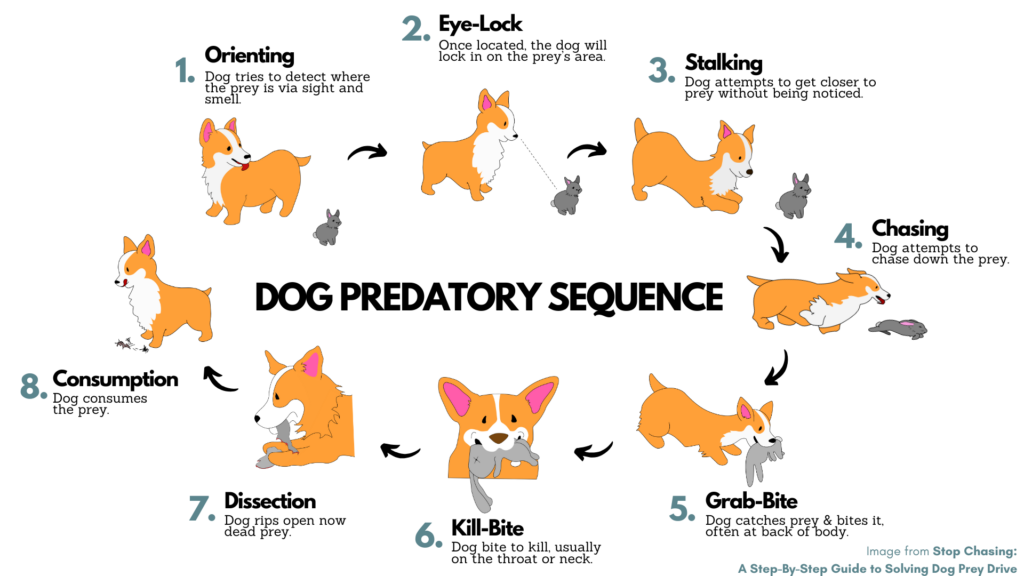
My own dog had very high prey drive, and I developed a reward-based training method that I now teach in my Stop Chasing book:

The goal isn’t to “stop instincts,” but to teach your dog a new pattern:
see an animal → pause → disengage → get reinforced
That’s why training is split into clear stages:
- First, you interrupt chasing before it starts using “leave it”
- Then, you build calm watching instead of immediate pursuit
- Finally, you reinforce voluntary disengagement
It’s also incredibly important to satisfy your dog’s instincts alongside training. Without that outlet, the predatory drive doesn’t disappear—it just builds.
👉 Grab this email freebie: Stop Animal Chasing
Key takeaway: Animal chasing is a natural behaviour that can be reshaped into calm disengagement with structured training and proper outlets.
8. Does Your Dog Actually Want to Greet Other Dogs? (Dog Social Styles Explained)
Dogs generally fall somewhere along a spectrum when it comes to social interaction:
- Dog avoidant: prefers space and actively avoids interaction
- Dog selective: chooses specific dogs to interact with and ignores others
- Dog social: actively seeks out and enjoys interacting with most dogs
Most dogs tend to be dog selective. However, this isn’t a fixed personality trait—it can shift depending on context.
Things like past experiences (especially negative encounters), overall stress levels, leash tension, and the behaviour of the other dog in front of them all influence how your dog responds in the moment.
For example, my own dog used to be much more socially driven and enjoyed off-leash interaction. After a few bad experiences with other dogs while on leash, she became more selective and now tends to avoid dogs that approach too intensely.
Understanding where your dog sits on this spectrum helps you make better decisions on walks. If your dog prefers space, putting them into environments with lots of unfamiliar dogs or expecting them to enjoy constant social interaction can actually create stress rather than confidence.
Key takeaway: Your dog’s social behaviour isn’t fixed—it’s context-dependent, and most dogs naturally prefer selective interaction over constant socializing.
9. Should You Let Your Dog Greet Other Dogs on Leash? My 4 Rules
On-leash greetings are one of those topics that seem simple on the surface, but can have a big impact on your dog’s behaviour over time.
While occasional greetings can be fine for some dogs in some situations, I don’t treat them as the default—and I’m very intentional about when I allow them.
Off-leash interactions (with appropriate, well-matched dogs) are generally a much better way for dogs to socialize because they can move freely, communicate naturally, and control distance. On-leash greetings remove a lot of that communication ability, which can make even friendly interactions feel more tense.
Here are the four rules I personally follow for on-leash dog greetings:
1. “No greetings” is the trained default
I train my dog that seeing another dog does not automatically mean she gets to say hello. This default matters because it prevents expectation-building, pulling toward every dog, and over-excitement. Greetings become something that is intentional, not automatic.
👉 Watch: How to Train Your Dog to Ignore Other Dogs: Step-By-Step Tutorial
2. I use a release cue before any greeting
If I do allow a greeting, it only happens after a clear cue (like “go say hi”). This keeps the interaction intentional rather than automatic, and helps my dog understand that most dogs will simply be calmly passed by.
3. The leash must stay loose during interaction
If there is tension on the leash during greetings, arousal levels tend to increase. It can also restrict natural communication, make dogs feel more physically constrained, and encourage face-to-face greetings—which can increase pressure and the likelihood of uncomfortable interactions.
4. Only calm, appropriate dogs get access
I only allow greetings with dogs that are showing relaxed, neutral body language. If a dog is overly excited, fixated, or pulling towards my dog, it’s not a good candidate for an on-leash greeting.
And honestly, even then, I still do on-leash greetings very infrequently.
Again, on-leash greetings limit natural communication.
Dogs can’t move freely, create distance, or disengage in the same way they would off leash—which is why I prefer off-leash social time when it’s safe and appropriate.
Key takeaway: On-leash greetings should be intentional and limited, while off-leash interactions (with the right dogs) are a better option for true socialization.
10. Loose Leash Walking vs Heel: What’s the Difference in Leash Training?
When it comes to leash training, two skills often get confused: loose leash walking and heel. While both are valuable, they serve very different purposes in real-world dog training.
👉 Watch: How to Train Heel & Loose Leash Walking: Complete Leash Training Guide
Loose Leash Walking:
Loose leash walking is what I used during the uncut walk. It’s a relaxed walking style where your dog has freedom to move, sniff, and explore the environment—as long as there is no tension on the leash.
This is the style that most closely matches how dogs naturally move. They don’t walk in straight lines or at a fixed pace; they stop, start, sniff, and adjust constantly. Loose leash walking allows for those natural behaviours while still maintaining the core expectation of no leash tension.
Once a dog is fully leash trained, this is the style I use most of the time on everyday walks.
Heel:
Heel is much more structured. In heel position, your dog stays close beside you, matches your pace, and doesn’t wander off or stop to sniff.
👉 Watch: How to Train a Dog to Heel: Step-by-Step Tutorial to Stop Leash Pulling
Heel is useful for situations like:
- Busy or narrow pathways
- High-distraction environments where you need more control
- Moments where safety or precision matters
- When your dog is earlier in their training and needs more frequent reinforcement and guidance
It’s also a really useful training tool for building focus, engagement, and responsiveness in the early stages of leash work.
Why I Train Both Heel and Loose Leash Walking:
After working with a lot of dogs, I’ve found that the most reliable leash walkers are the ones who understand both skills clearly.

In my complete leash training program, I encourage focusing on heel in the earlier phases of training, then gradually transitioning into more loose leash walking once your dog is reliable and ready for more freedom.
The key is not confusing your dog by using them interchangeably. Instead, I suggest training both, cueing them properly, and using them intentionally depending on the situation.
Key takeaway: Loose leash walking is for everyday freedom and exploration. Heel is for structure, focus, and control in higher-distraction or safety-focused situations.
11. Why Your Dog’s Leash Training Falls Apart Outside (Skill vs Environment Mismatch)
One of the biggest reasons leash training seems to “fall apart” in real life is because of a mismatch between skill level and environmental difficulty.
A dog can walk beautifully in a calm space, then suddenly struggle the moment you add real-world distractions like bikes, dogs, noise, movement, smells, and unpredictability. It can feel like their training disappeared.
But what’s actually happening is much simpler: the environment has become more difficult than the level your dog is ready for.
Leash walking is a skill, and like any skill, it needs to be built progressively.
I often joke that people expect university-level leash walking from a dog who hasn’t even gone through kindergarten yet.
A quiet environment is essentially “kindergarten level,” while a busy walkway full of stimulation is more like “university level.” If we skip too many steps in between, the leash training will break down.
When training is structured correctly, we slowly increase distraction level while maintaining success at each stage. That’s what builds true reliability in real-world environments.
👉 Watch: Why Leash Training Falls Apart in the Real World (and 3 Ways to Fix It)
Key takeaway: Leash training breaks down when the environment is harder than the level the dog has been trained for.
If you want to see how all of these pieces come together in a real environment, watch the uncut walk—it shows how these decisions look in real time, not just in theory.
👉 Watch: Real, UNCUT Dog Walk in a Busy Area (Loose Leash Walking in Real Life)
Disclosure: Happy Hounds uses affiliate links. Purchasing with these links will not cost you any extra, but I get commissions for purchases made through these links. Affiliate links help me to continue to offer free resources & blog posts. I would love if you used them!
The Real-Life Guide to Loose Leash Walking (Even Around Distractions)
About the author:





+ show Comments
- Hide Comments
add a comment