


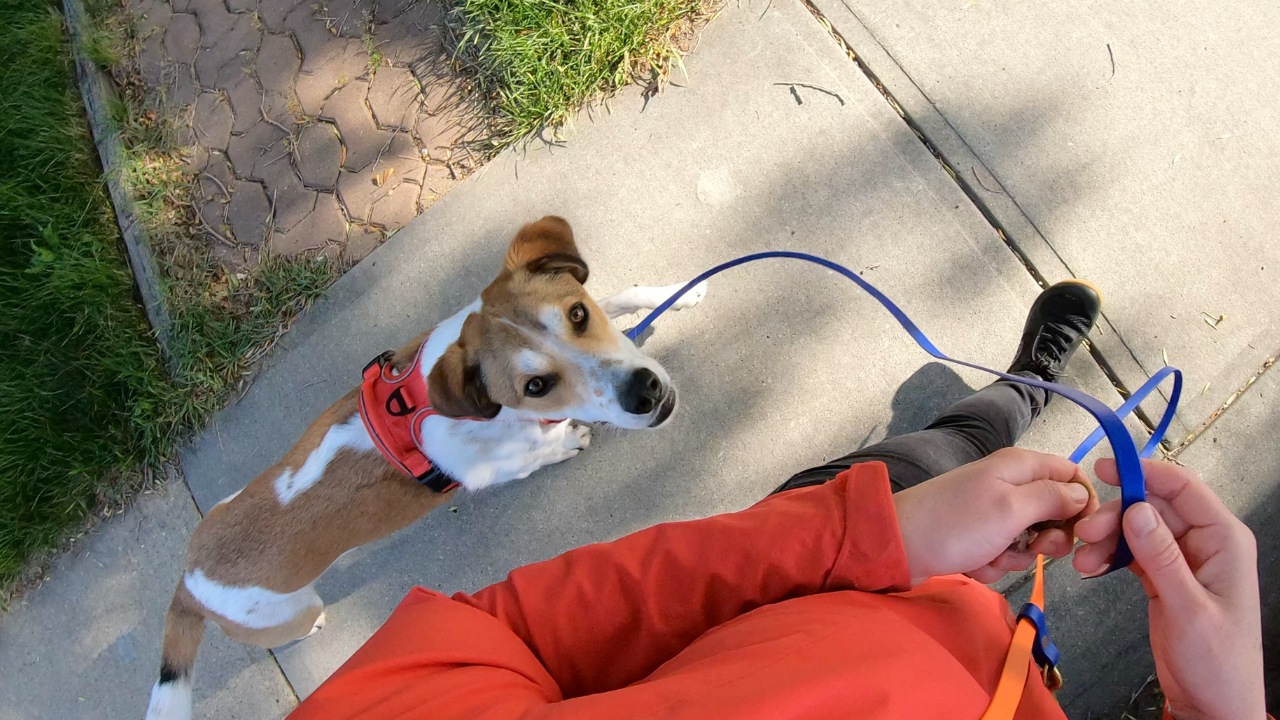



As a dog trainer, I’ve helped a lot of dogs learn to walk nicely on leash. But there’s one piece of advice I give to almost every client — and it always surprises them:
If you want your dog to walk nicely on leash in a busy, distracting setting… don’t start training there.
I don’t even suggest starting on a quiet street.
No — I suggest starting leash training right at home!
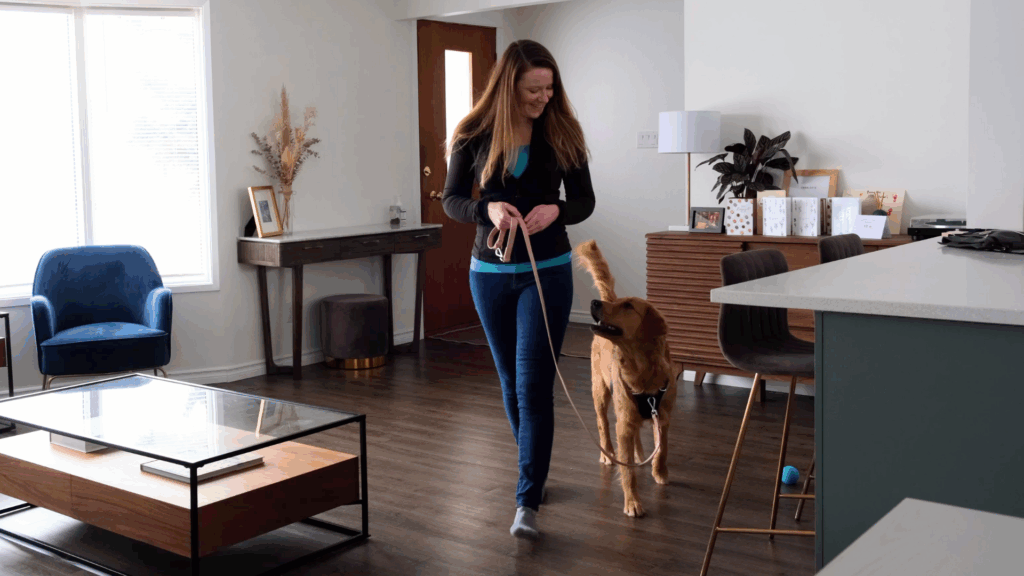
You may wonder how training indoors can possibly help your dog walk well “in the real world.” Think of it like this:
If you were learning to park a car for the very first time, would you go to a Costco parking lot on a Saturday afternoon? Of course not!
Yet many people do the equivalent with their dogs — taking them straight into distracting, high-pressure environments before teaching any foundational skills.
Contents: How to Train a Dog to Heel
This blog post will explain:
- Why Start Heel Training Indoors?
- Heel vs. Loose-Leash Walking: What’s the Difference?
- What You Need to Train a Dog to Heel
- Heel Training Step 1: Treat Lure
- Heel Training Step 2: Intermittent Rewards
- Heel Training Step 3: Add the Cue “Heel”
- Taking Heel Training Outdoors
- Additional Resources: Leash Training Guides & Videos
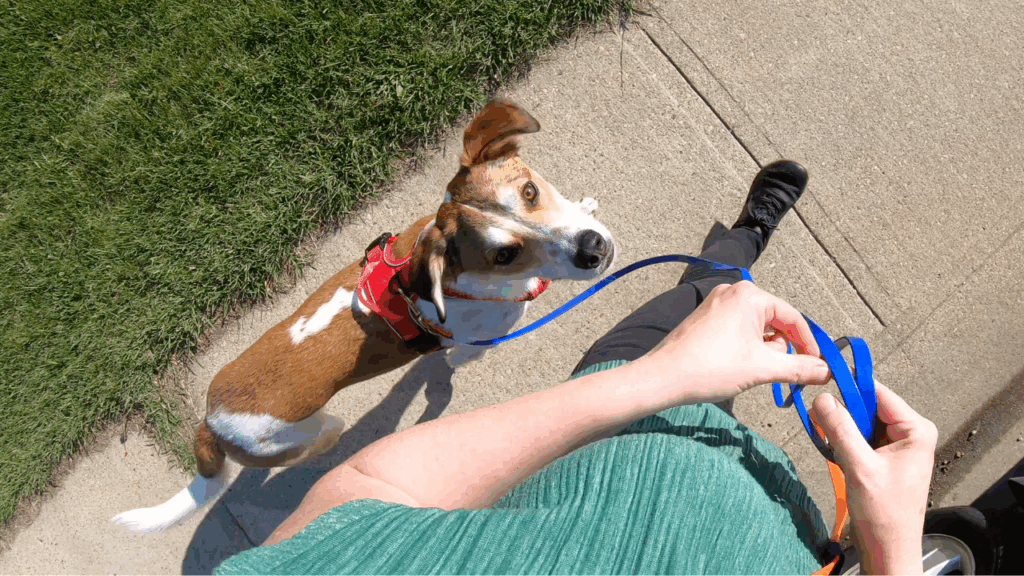
Why Start Leash Training Indoors?
Let’s go back to that parking analogy. Where would you start practicing?
In an empty parking lot. Minimal distractions, plenty of space, and the opportunity to safely build foundational skills before leveling up to a crowded Costco.
Likewise, your dog needs a place to learn where distractions are low and it’s safe to make mistakes.
The best place? At home.
There aren’t squirrels running past, interesting smells, other dogs, or all the unpredictable things that happen on real walks. Your dog is relaxed and able to focus. Once you’ve built those indoor foundations, you can gradually work your way up to more distracting environments.
Heel vs. Loose-Leash Walking: What’s the Difference?
When people say a dog can “walk nicely on leash,” they’re often talking about one of two distinct skills:
- Heel: A structured position where your dog walks beside your leg, matching your pace.
- Loose-leash walking: A relaxed, exploratory walk where your dog can stop, sniff, and enjoy the environment — as long as they’re not pulling.
In this post, I’m focusing on how to train a dog to heel. Building this foundation indoors (and creating a strong reward history for being at your side) actually makes both styles of walking easier once you transition outdoors.
If you want step-by-step guidance on when to use heel, when to use loose-leash walking, and how to train both, check out my full leash training guide:
➡️ Leash guide: 6 Weeks to Dream Walks: Step-By-Step Leash Training Program
It includes written instructions, photos, and video tutorials to take your dog from a total beginner to confidently walking in busy, real-world environments.
What You Need to Train a Dog to Heel:
- A collar or, preferably, a harness (better for protecting the neck if your dog pulls)
- A 6+ ft leash
- High-value treats
- A loaded marker word
How to Train a Dog to Heel: My 3-Step Method
If you’re a visual learner, I strongly recommend watching this YouTube tutorial where I train my client Gus how to heel. It covers the steps in more detail, along with common mistakes and bonus tips.
➡️ Watch: How to Train a Dog to Heel (Step-by-Step Tutorial to Stop Leash Pulling!)
Heel Training Step 1: Treat Lure
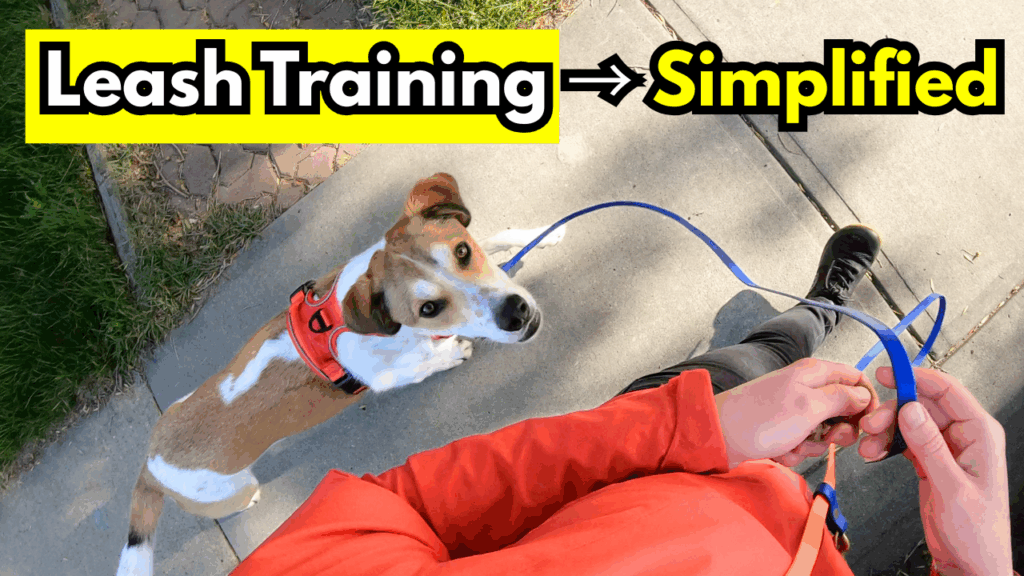
For the first few repetitions, use a treat lure (a treat held right in front of your dog’s nose) to help them stay in the heel position as you walk.

Hold the treat near your dog’s nose, say something upbeat like “Let’s go!” and begin walking. Every few steps, give your dog a tiny treat so they learn:
“If I walk in this position at my person’s pace, great things happen.”
If you have a small dog and struggle to reward them in motion, watch this one-minute tip video for a back-friendly alternative.
➡️ Youtube Tutorial: How to Reward a Small Dog on Walks (Back-Friendly Training Tip!)
I don’t suggest adding the cue “heel” yet for two reasons:
- After many years of training, I’ve consistently seen better results when dogs learn the action before we name it. Once they reliably walk by your side, adding the cue makes the association easy.
- I love minimizing errors whenever possible. Since we haven’t asked for anything yet, your dog can’t really make a mistake. If they lose focus, it’s not a big deal — this stage is about gathering information: how often to reward, how much praise they need to stay engaged, and what keeps them focused.
Once your dog can stay in heel position with a treat lure for about 15 seconds, move on to Step 2.
Heel Training Step 2: Intermittent Rewards
As soon as you can, start phasing out the treat lure and switch to intermittent rewards. You’re no longer guiding your dog with a treat — instead, you’ll mark and reward every few steps to build a reinforcement history for being at your side.
Two common mistakes to avoid:
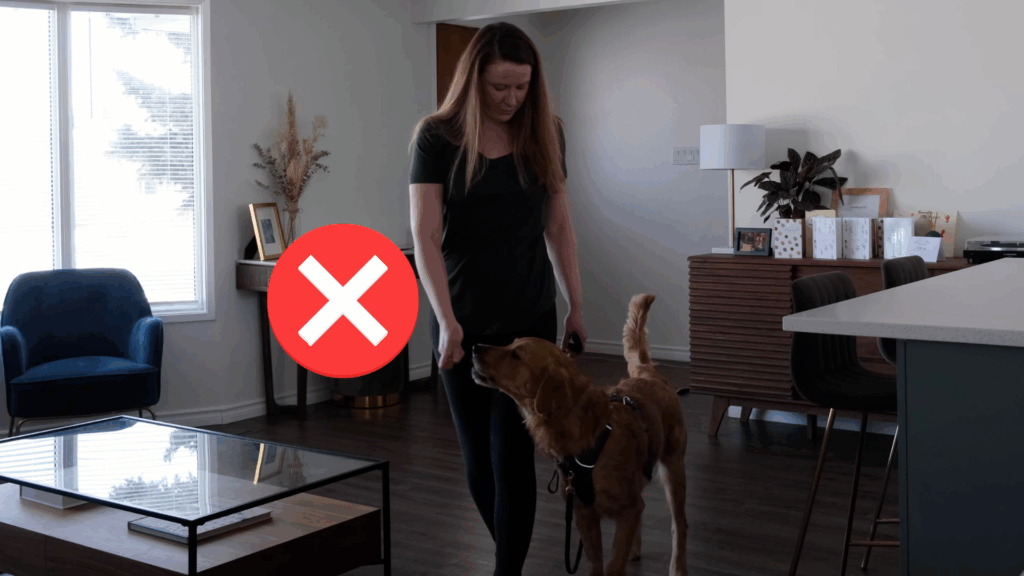
- Rewarding across your body, which can teach your dog to cut you off
- Stopping to reward, which can encourage your dog to lag behind
Reward in motion to reinforce actual heeling.
Once your dog can walk beside you for about 15 seconds with intermittent rewards, you’re ready for Step 3.
Heel Training Step 3: Add the Cue “Heel”
Now you can put the action on a cue.
I train a dog to “heel” similarly to the rules I’d have for training a dog to “stay”: once I give the cue, I want the dog to maintain that position until released.
➡️ Youtube Tutorial: How to Train Your Dog to Stay: Complete Beginner’s Guide
For the first few repetitions after adding the cue, go back to using a treat lure to strengthen the association between the word “heel” and the action of walking at your side.
Then transition back to intermittent rewards.
I finish a session by asking the dog to sit, or by saying “ok!” and tossing a treat to release them to loose leash walk.
Taking Heel Training Outdoors
Clients are always amazed at how much easier leash walking becomes after just a few days of these simple indoor steps. Dogs repeat what works, and building a strong reward history indoors leads to far better results once you take training outside.
For more leash-walking help, explore these additional resources:
➡️ Leash guide: 6 Weeks to Dream Walks: Step-By-Step Leash Training Program
➡️ YouTube Playlist: How to Train a Dog to Heel & Walk Nicely on Leash
Happy training!
Disclosure: Happy Hounds uses affiliate links. Purchasing with these links will not cost you any extra, but I get commissions for purchases made through these links. Affiliate links help me to continue to offer free resources & blog posts. I would love if you used them!
How to Train a Dog to Heel: Easy 3-Step Method to Stop Pulling on Leash
About the author:






+ show Comments
- Hide Comments
add a comment