




How to Train a Reliable “Leave It!” Skill That Actually Works on Walks:
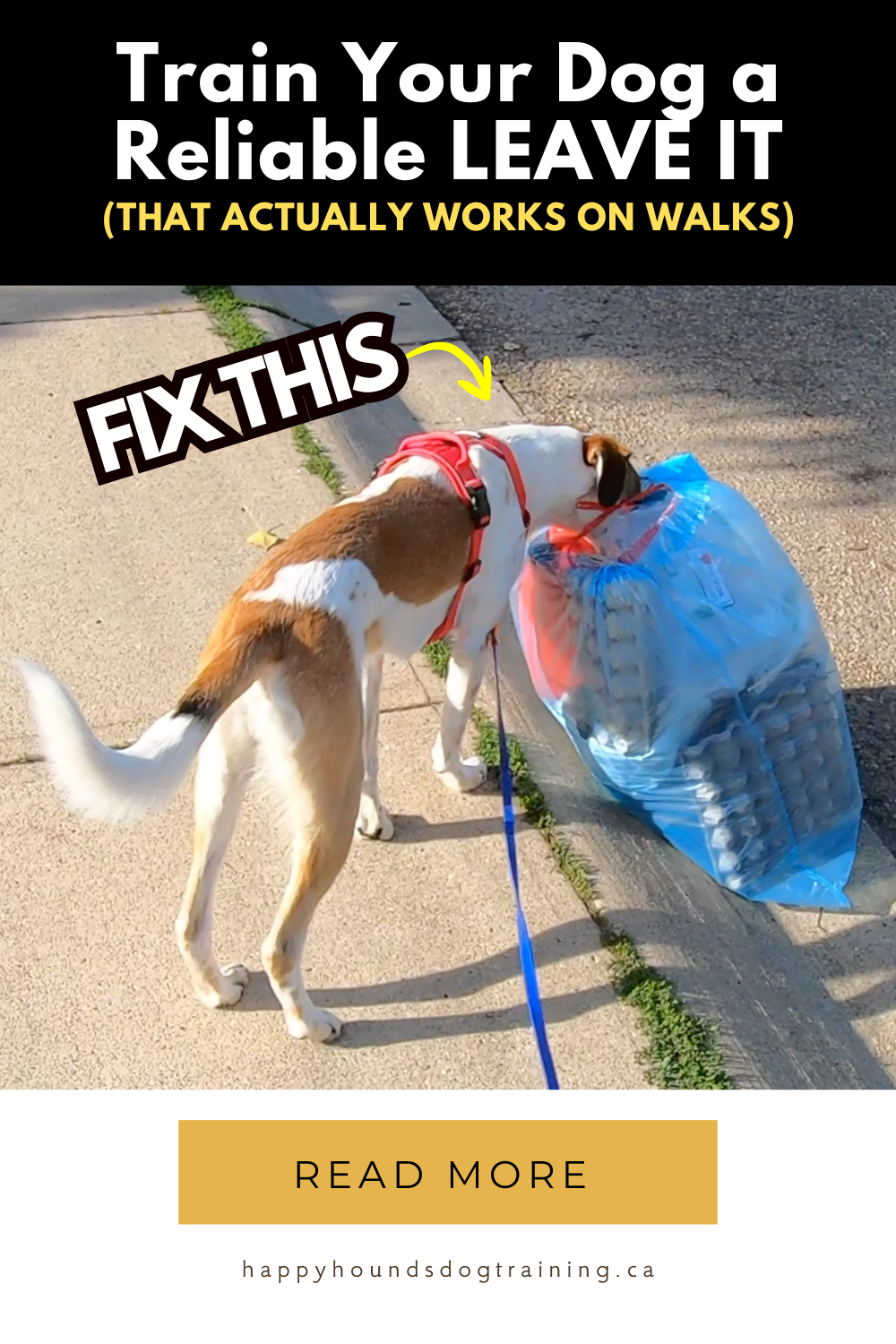
Picture This: You’re strolling along with your dog, enjoying the fresh air, when suddenly — your dog spots something disgusting on the ground. You panic and just know: they’re going to try to eat it.
We’ve all been there!
Watching your dog consume something gross on a walk, wishing their “leave it” skill had actually worked.
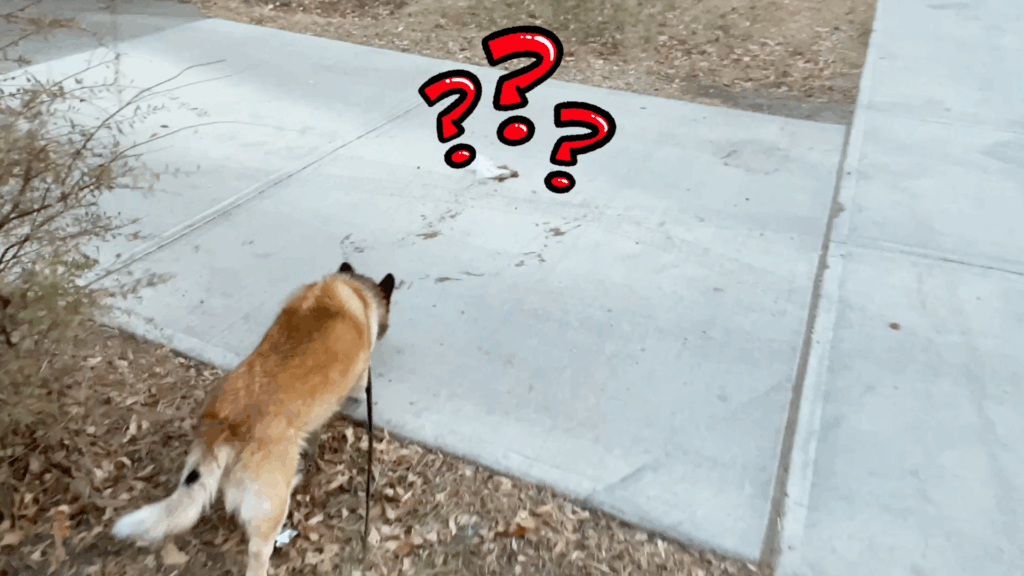
Years ago, my dog Neirah ate a Band-Aid she found on a walk. It wasn’t even my Band-Aid — it was someone else’s. That makes it 100× worse.
As I stood there dry-heaving on the sidewalk, it was one of those motivationally low moments when you realize that something really needs to change. Despite all the “leave it” training we’d done at home, the cue completely fell apart in the real world.
Why is that?
Why Your Dog’s “Leave It” Fails on Walks
Most people, myself included, start teaching their dog to leave it the common way: your dog sitting politely and ignoring treats or other distractions we choose to present.
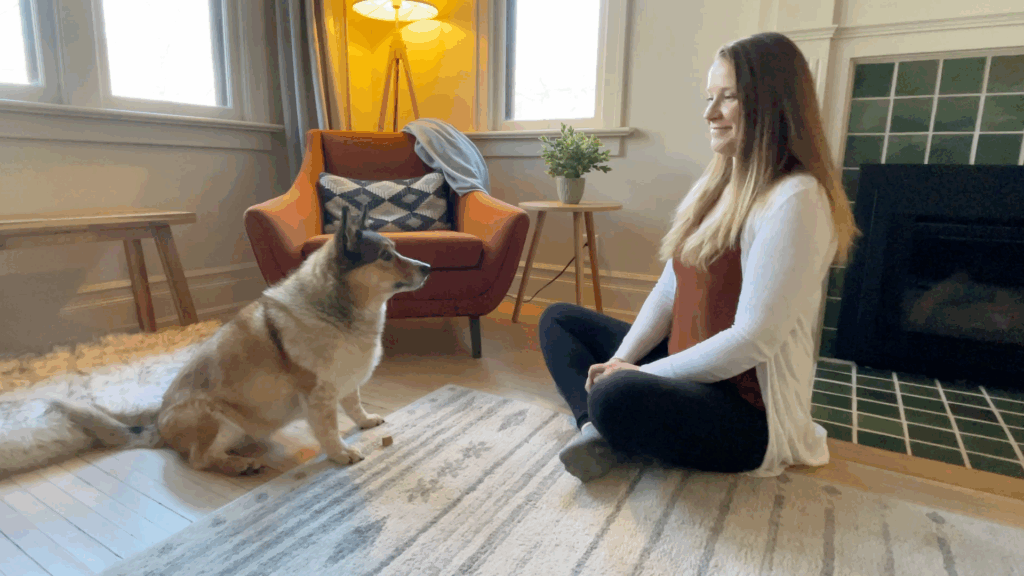
Neirah was a model student. Her “leave it” was flawless — she could even ignore steak being tossed at her from a distance!
But out on walks, it was like she’d never heard the cue before.
Why?
Here’s the thing: most dogs only learn “leave it” in one very specific context — usually indoors, while stationary, and quite close to their guardian. That’s a great place to start this training (and what I recommend to my clients for a beginner “leave it”), but it doesn’t prepare them for the chaos of the outside world.
On walks, everything changes:
- Your dog is already moving
- The smells and sights are way more novel and exciting than anything at home
- They’re often several feet ahead of you — not sitting politely at your side
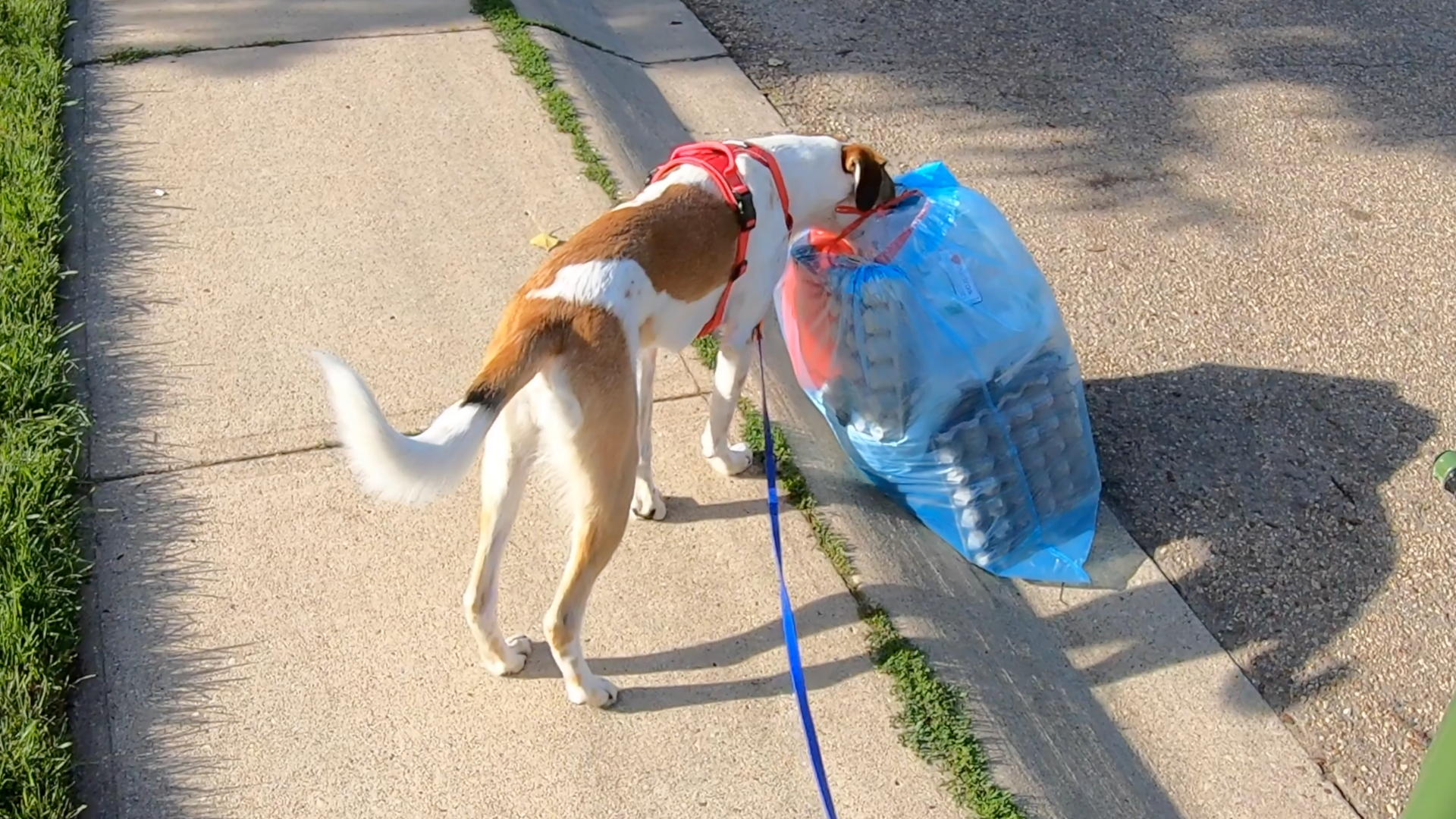
- And the world is full of irresistible “treasures” like Band-Aids, takeout containers, and chicken bones
What this means is that your dog hasn’t actually generalized the meaning of “leave it.” They know what it means during structured training sessions at home — but on walks, once you add motion, distance, and distractions, it’s like they’ve never heard the word before.
The Real Skill You Want: A Reliable “Leave It!”
When we talk about advanced or real-world obedience, what we’re really talking about is reliability.
A reliable “leave it” means your dog understands the cue in any environment — no matter what’s in front of them or how far away they are. It takes time and thoughtful training, but it’s one of the most valuable life skills your dog can learn.
A reliable “leave it!” gives them the freedom to explore safely — and gives you peace of mind that they’ll actually listen when it counts.
This isn’t about being more strict!
It’s about helping your dog understand that “leave it” always means the same thing, whether it’s a piece of kibble on the floor at home or a chicken bone at the park.
Training a reliable “leave it!” can save your dogs life!
Why It’s Not Your Dog’s Fault
When “leave it” fails on walks, your dog isn’t being disobedient — they’re just confused.
Dogs learn through repetition and context. If all their “leave it” practice has happened at home, they’ve built a very specific mental picture: we do this thing indoors, near my person, when the floor smells like treats.
So when the environment changes — new smells, moving targets, greater distance — they don’t automatically recognize the cue.
It’s like being asked to perform a familiar task, but in a foreign language.
So how do you train a leave it skill that actually works on walks?
Reliable “Leave It!” Training Step 1: Build the Foundation
Before working on the advanced version of “leave it,” make sure your dog has two key foundations:
- A Loaded Marker Word — something like “Yes!” that tells them exactly when they’ve done the right thing. A marker word is especially important when training at a distance. (Watch this to learn how & why to load a marker word with your dog.)
- A Solid Beginner “Leave It” — This means your dog can leave food or objects alone when you’re nearby and they’re stationary. (If you haven’t taught that yet, I’ll link my beginner “leave it” tutorial featuring my client Gus here.)
Once those basics are in place, you can start generalizing and proofing the cue — helping your dog understand that “leave it” means the same thing everywhere, not just at home.
That’s where things get interesting (and a little more challenging), but it’s also where you’ll start to see the transformation: from “my dog ignores me outside” to “wow, they actually listened!”
Reliable “Leave It!” Training Step 2: Train for the Real-World
If you want a reliable “leave it” that actually works on walks, your training needs to address real-world distractions, distance, and high-value temptations — and that’s exactly what makes the skill advanced, reliable, and life-saving.
Now, how do you do that??
This tutorial shows you my rewards-based “secret tool” for training a reliable “leave it” that truly works on walks!
Because once your dog understands “leave it” in any environment, those cringe-worthy sidewalk moments become a thing of the past — and your walks become calm, confident, and fun again.
Happy training 🙂
Disclosure: Happy Hounds uses affiliate links. Purchasing with these links will not cost you any extra, but I get commissions for purchases made through these links. Affiliate links help me to continue to offer free resources & blog posts. I would love if you used them!
Why Doesn’t My Dog’s Leave It Work On Walks? (Training a Reliable Leave It)
About the author:






+ show Comments
- Hide Comments
add a comment