



Are you feeling overwhelmed by everything you want to teach your dog? Not even sure where to begin? Wondering if the order even matters?
As a professional dog trainer, I absolutely believe that it does.
Starting with the right foundations makes everything that follows easier, more effective, and far less frustrating — for both you and your dog. When you’re staring down a long list of training goals, having a clear, confident starting point makes it all feel much more manageable.
That’s why I always recommend starting with these 4 key training foundations on Day 1.
I suggest these to nearly every client because they lay the groundwork for success. They make everything you teach afterward easier and more effective.
You’ll wish you tried them sooner!
Prefer video content? Watch the full list on YouTube — it includes step-by-step demonstrations of everything covered in this post.
1. Test Your Dog’s Treat Value Ladder
In rewards-based training, treats are a vital part of reinforcing good behaviour — because what gets rewarded gets repeated. But not all treats are created equal in your dog’s eyes.
Think of it this way: Would you work harder for $100 or $10?
Your dog feels the same way. The right treat can dramatically increase their motivation and focus.
But unlike money having consistent value, dogs have individual food preferences. Some may love beef, while others prefer salmon or chicken. That’s why it’s important to find your dog’s personal “$100 treat.”
How to Test Treat Value:
- Offer 2–3 different treats at the same time.
- Watch which one your dog chooses first.
- Repeat this with different pairings to identify their preferences.
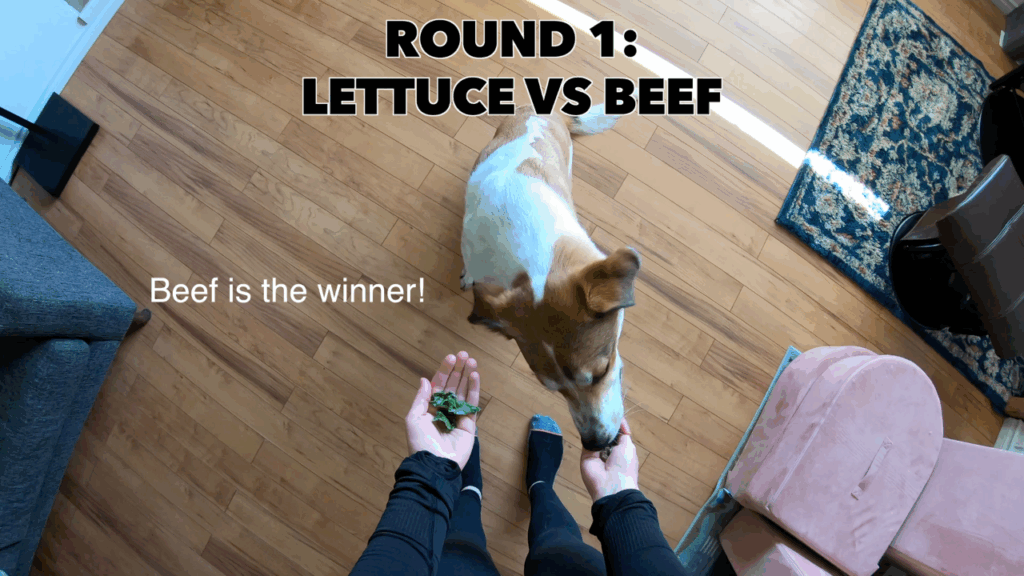
If you’re wondering how this tests treat value, just think of offering your dog beef and lettuce at the same time. Intuitively, you KNOW your dog is choosing the beef first. It’s obviously higher value. We’re just using that same premise to test foods we’re less confident what the dog prefers. If your dog consistently goes for one over the others, you’ve found your high-value reward.
[If your dog alternates between two treats, they likely value them equally — which means they’re interchangeable in training sessions.]
Pro Tip: Many dogs don’t have the impulse control to wait while you prepare a “platter test.” Instead, try the hand-sniff test — let your dog smell each treat in your closed fists, then reveal both options at the same time and see which one they pick.
Two-Treat System for Training
I typically recommend bringing two types of treats to your training sessions:
- A high-value treat for general use.
- A very high-value treat for difficult behaviours or highly distracting environments.
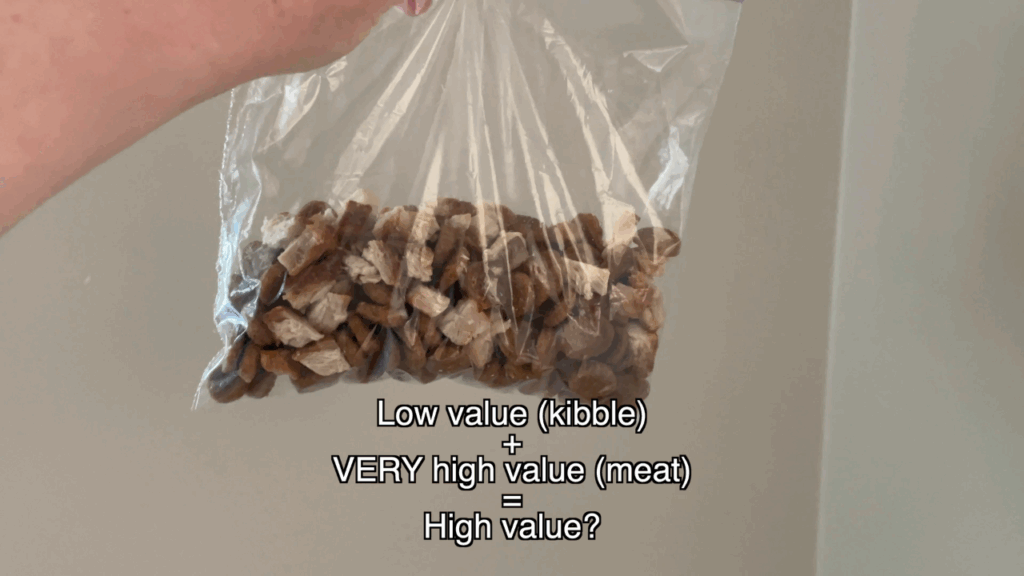
If your dog has dietary sensitivities or gets sick from too many treats, try this budget- and belly-friendly tip: use their regular kibble as the base and “flavour coat it” with a small amount of their favourite very high-value meat. It’s effective and easier on the stomach — not to mention more affordable than store-bought treats.
2. Load a Marker Word
Dogs form associations in seconds — often much faster than we can deliver a treat. So how can we clearly communicate which specific behaviour earned the reward?
That’s where a marker word comes in.
A marker word (like “Yes!”) acts as a bridge between the behaviour and the reward. It lets your dog know exactly what they did right, even if there’s a slight delay before the treat reaches them.
How to Load a Marker Word:
- Grab a few treats — but don’t show them to your dog yet.
- Say your marker word clearly (e.g., “Yes!”).
- Immediately give your dog a treat.
- Repeat 10–15 times, 2–3 times a day for a few days.
You’ll know your marker word is “loaded” when your dog perks up or looks at you expectantly when they hear it — even when you don’t have food in your hand. Bonus points if they lick their lips!
Important: A marker word is a promise, not a replacement. Always follow it with a reward!
3. Boost Engagement and Name Response with the Check-In Game
If your dog ignores you on walks, struggles with recall, or just isn’t paying attention — this game is a must.
This simple exercise teaches your dog to:
- Respond to their name
- Check in with you during walks
- Re-engage with you without being prompted
It’s a great results booster for leash walking, recall, reactivity training, and more!
How to Play:
- Start in a low-distraction area (your yard, an empty field, or a quiet parking lot).
- Drop 2–3 treats on the ground while you move a short distance away.
- As your dog finishes the treats and looks up, call their name.
- When they move toward you, say your marker word.
- Reward from your hand when they reach you.
Repeat this several times.
Phase 2: Once your dog begins coming back before you call them, stop using their name. Let them choose to return on their own. When they do — mark and reward. This reinforces voluntary check-ins!
Tip: Use a long line if you’re in an unfenced area to keep things safe.
4. Start Teaching “Leave It!” as Soon as Possible
“Leave it!” is one of the most important cues you can teach your dog- and I recommend starting as early as possible. Depending on what your dog is going after, a well-trained “Leave it!” cue can literally save their life.
At it’s core, “Leave it!” means: “Don’t go after that thing you’re interested in.”
Once trained, “Leave it!” becomes a reliable way to get your dog to disengage from distractions on cue — including animals, food, and all kinds of gross or dangerous sidewalk distractions.
If your dog needs help building this skill, I have two tutorials to watch:
- In this video I show how to teach “Leave It!” step-by-step (and how to avoid the most common mistakes):
2. In this tutorial I show how to use a trained “Leave it!” cue to stop dogs from chasing animals:
Final Thoughts
If you’re just starting out, these four key training foundations are the best place to begin:
- Test treat value to discover what motivates your dog most.
- Load a marker word to speed up learning and build clarity.
- Play engagement games to build attention and responsiveness.
- Start “Leave It!” training for impulse control and to boost safety.
These dog training foundations will make everything else you teach your dog easier, faster, and more successful!
Disclosure: Happy Hounds uses affiliate links. Purchasing with these links will not cost you any extra, but I get commissions for purchases made through these links. Affiliate links help me to continue to offer free resources & blog posts. I would love if you used them!
4 Must-Know Dog Training Tips (That Make Training So Much Easier)
About the author:





+ show Comments
- Hide Comments
add a comment