




“My dog broke my wrist. What could I have done differently?”
I received the following fantastic question on my “Real, Unedited Training Walk With a Reactive Dog” Youtube video:
Question: “During the walk, my two dogs react to the dog across the street. This dog was barking and trying to come towards us. This happened at the end of the intersection, so I didn’t see the dog coming. Before I could turn around to increase the distance, my dogs pulled me to the ground trying to meet this dog. I broke my wrist. I’m now in a cast. What would you have done to avoid this? Thanks.”
My Answer: Oh goodness. I’m so sorry that happened to you. What a painful and scary event 😞 I think this question could really help more people, so I’m actually going to use it (anonymously) in my upcoming email newsletter so that I can answer it more in-depth than I usually have the time capacity to do in Youtube comments. (For anyone reading this, if you’d like to join my free newsletter you can do so HERE)
I want to suggest a few things that would help prevent it. Some of these you can even start working on indoors now so that you’ll immediately be safer out on future walks.
First, I always like to talk about the WHY.
I think it’s important to discuss dog threshold, and why we see the “escalated” behaviours such as barking, lunging, and even potentially biting at a certain point. I like to explain threshold as the dogs “emotional tipping point”… think of it a bit like a door threshold in your home.
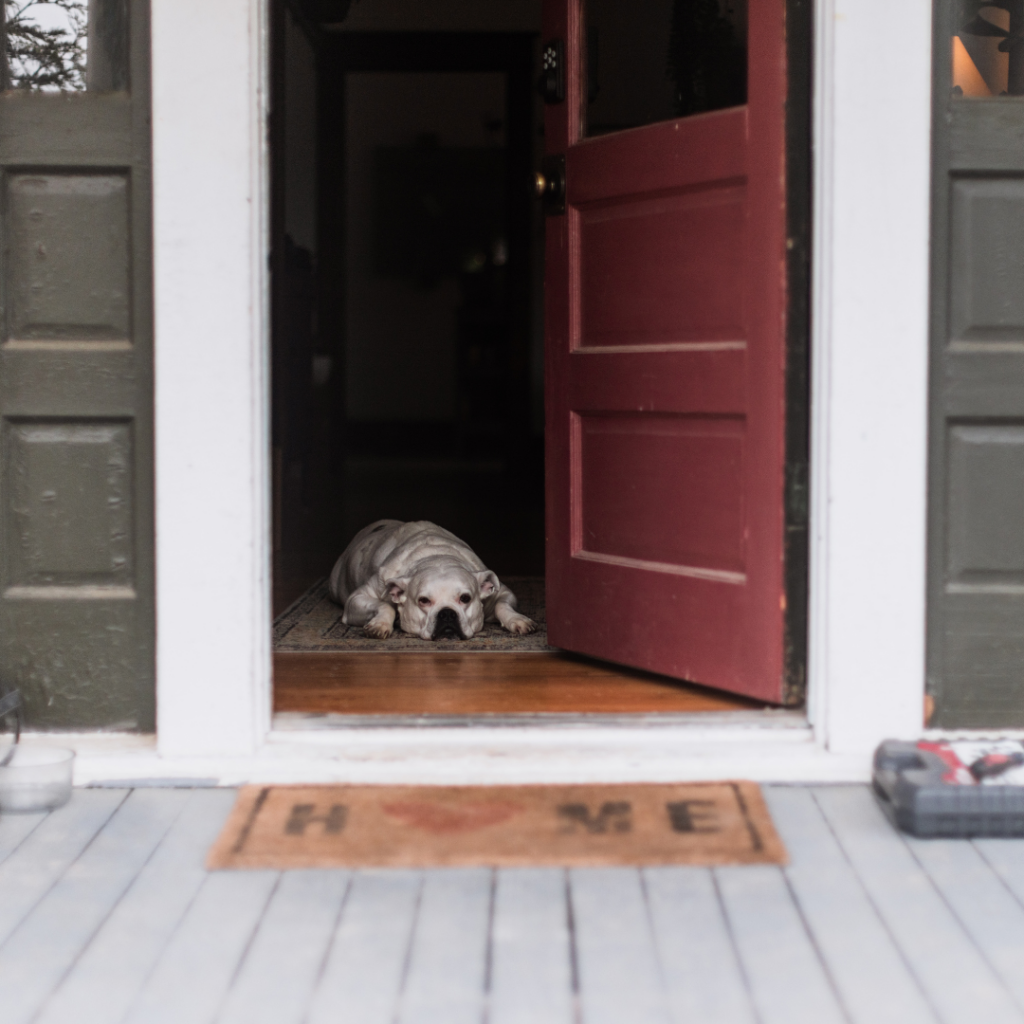
When you step over a threshold, you go from one zone to another (example: from outside to inside your home). Dog threshold is similar. There’s a threshold, that once crossed, takes the dog from being able to cope and learn, to a state where they’re simply reacting. Their thinking, learning brain shuts off. If your dog is highly stimulated by or reactive to other dogs, factors that influence how much their threshold will be effected by other dogs include:
- How many: Walking past one dog will be less stressful than walking past 3!
- Intensity: Big dog walking past, or small? Is the other dog ignoring your dog or barking at them?
- Distance: This factor is VERY important!! How far away the trigger is has a tremendous effect on threshold.
- Duration: How long is your dog exposed to their trigger? Did the other dog walk right past, or are they in your dog’s view for 10 minutes without a break?
- Frequency: Does your dog get a break to calm down between triggers, or do dogs repetitively keep walking past?
- Physical and emotional state: Discomfort, thirst, hunger, pain, etc can all make your dog more likely to go over threshold.
In your case, the other dog was quite close, was moving, and barking. That’s a highly stimulating combination, so it makes sense that your dog would be more affected by it.
(Understanding your dog’s behaviours always leads to better training results, so I highly encourage watching THIS VIDEO I made about dog threshold. I tried to make it as informative as possible, but also funny!)
So, what can you do to prevent more injuries?
I like a two-phase approach where I train skills that allow me to quickly move my dog away from triggers when needed immediately while ALSO conditioning the dog to be able to accept those more triggering events in the future without needing to move away.
To ensure that your dog moves away immediately when needed, I suggest training both an emergency U-turn and also conditioning an immediate reorientation back to you when hearing their name. Here are two tutorials for those:
- How to Train an Emergency U-Turn
- Training a reorientation when hearing their name: The ONE Dog Training Game I Play With *Almost* Every Client
Both skills can easily be taught within a week, so I’d start with those!
Next, conditioning your dog to be able to calmly accept more triggering events is a longer term training project. I personally want to condition dogs to be quite neutral to both the sight and sound of other dogs.
For conditioning neutrality to the sight of dogs, watch this tutorial:
I also have a tutorial for sound conditioning which I’ll link here. However, I’ve been wanting to create one SPECIFICALLY for how I condition dogs not to care about other dogs barking at them on walks. I’ve filmed the process with numerous reactivity clients of mine, but I haven’t made it into a video quite yet. To watch that when it comes out, you can subscribe to my Youtube channel HERE.
Disclosure: Happy Hounds uses affiliate links. Purchasing with these links will not cost you any extra, but I get commissions for purchases made through these links. Affiliate links help me to continue to offer free resources & blog posts. I would love if you used them!
My Dog Broke My Wrist. What Could I Have Done Differently?
About the author:





+ show Comments
- Hide Comments
add a comment