
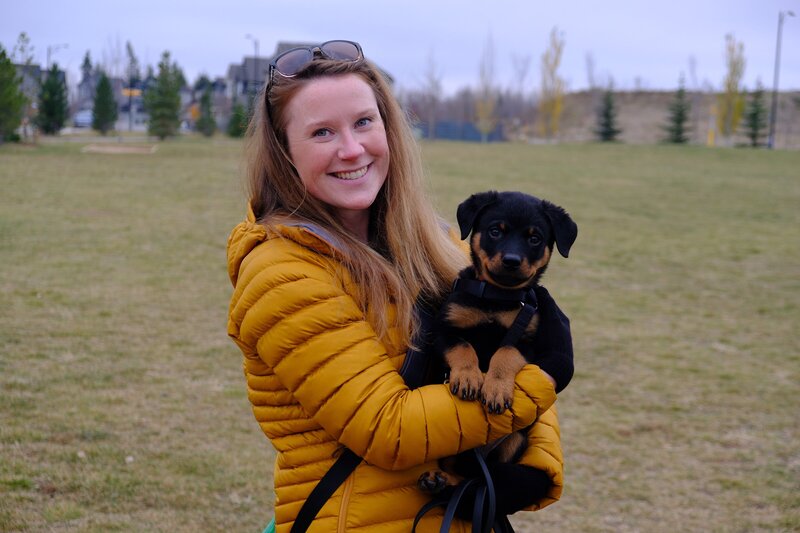

![What If My Dog Isn’t Food Motivated? [Can I Still Use Reward-Based Training?]](https://happyhoundsdogtraining.ca/wp-content/uploads/2026/09/Try-This-10.png)
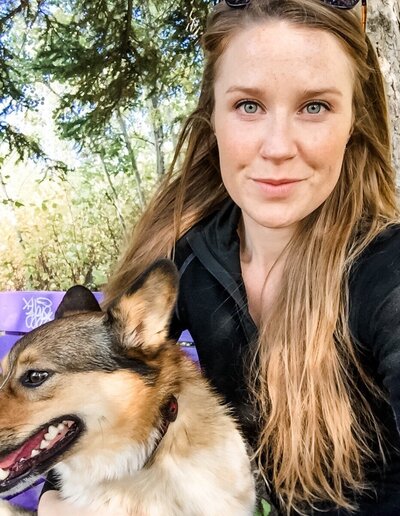


I have been asked variations of this comment or question 12 times this week alone: “What if my dog isn’t food motivated?”
As a force free dog trainer who shares real training tutorials on Youtube (channel linked here), a lack of food motivation is by far the most common problem people ask me about. I’ve never felt like I could adequately answer it in a quick comment reply, so I finally sat down and created a full resource!
![What If My Dog Isn’t Food Motivated? [Can I Still Use Reward-Based Training?]](https://happyhoundsdogtraining.ca/wp-content/uploads/2026/09/START-13-1024x576.png)
And I think when somebody says, “My dog isn’t food motivated,” they’re actually asking one of two different questions.
The first is:
How can I train my dog without using food?
And the second is:
I want to use treats, but my dog doesn’t seem to care about them. How do I make this work?
I want to answer both of those questions.
And if you fall into that second category, I’m going to give you three common reasons food may not seem to be working for your dog, and more importantly, how you can change that. I’ll also share one really simple test that you can do to see if treat training is going to work for your dog or not.
Do You HAVE to Use Treats to Train Your Dog With Positive Reinforcement?
No.
Positive reinforcement training does not necessarily mean treat training. Food is just one type of reward.
Technically, positive reinforcement means that we offer something the dog wants after a desirable behaviour to make it more likely that they’ll repeat that behaviour again.
And that “reward” can be all kinds of things your dog likes.
One that I personally LOVE using is play. Play-based training can be fantastic for things like recall, and I also use it a LOT when working with dog prey drive.
In fact, after working with a lot of dogs that chase animals, including my own dog Neirah, I’ve personally found that the right toy can be even MORE effective than food rewards at solving chasing behaviours, particularly at the beginning of training.
By using specific toys as functional rewards that really satisfy that prey drive instinct, you can get incredible results.
💻 I have a free email guide that covers some of my favourite toys for prey-drive training and why I like them so much, so I’ll link that for you here if that’s something you’re working on.

However, play is definitely not your only option. Genuinely, anything that your dog enjoys can potentially be used as a reward.
Depending on your dog, praise or affection can be rewarding. Another example is that once your dog has developed some good leash skills, getting to access really good smells and being allowed to sniff can become a reward for walking nicely with you.
Now, it’s important to understand that all of these rewards are going to fall somewhere on a hierarchy for your individual dog. Your dog might like praise, but LOVE playing tug. The reward value for each thing your dog “likes” isn’t going to be equivalent.
We’ll come back to that later.
But the point I want to make is:
Reward-based training does not mean you HAVE to use food.
There are tons of other things we can use to reinforce desirable behaviour. But this leads to an obvious question:
So Why Do Trainers, Including Myself, Use Treats During Training?
Because food is a fantastic reward when used properly!
Treats are incredibly convenient. They’re portable and relatively inexpensive. They’re often very high on that reward hierarchy for the dog. And because you can deliver them very quickly, you can get a LOT of successful repetitions without having to stop and play tug for 30 seconds every single time your dog gets something right.
I also find food is a more effective reward in situations where I don’t want the reward itself to amp the dog up further.
So if I’m working on things like learning not to jump on house guests, or leash reactivity, I’m probably not going to want to use a really stimulating reward like play when I’m actually trying to encourage calmer behaviour.
So even though you absolutely can train without treats, food is still an incredibly useful training tool.
Which brings me to what I think a lot of people are actually asking:
“Okay, but I want to use treats. My dog just doesn’t seem to care about them. What do I do?”
A Simple Test: Is Your Dog Actually Food Motivated?
First, I suggest a really simple test to find out if your dog genuinely is not food motivated.
Picture your dog relaxing at home.
Nothing exciting is happening. You’re just hanging out.
Now imagine you offer your dog a tiny piece of fish or steak—something meaty and delicious.
Would they happily eat it?
If your answer is no, and even in your quiet house your dog genuinely has very little interest in food, then your dog really may just not find food particularly motivating.
That’s okay!
Go back to what we just talked about earlier and start figuring out what your dog does find rewarding.
But if your answer is:
“Oh, at home? Yeah, they’d inhale it.”
Perfect.
That tells us something really important.
Your dog does find food rewarding.
So if that interest seems to magically disappear when you start training, we need to figure out what changed. Something about how, when, or where you’re using food is making it stop working, so let’s solve that.
There are three common issues I would look at.
#1: Is the Food You’re Using Actually Rewarding to YOUR Dog?
The first one sounds incredibly obvious, but I see this all the time:
Your dog might just not care that much about the treat you’re using.
After working with countless dogs, if you asked me what the highest value, most rewarding food is, my answer would be:
It depends on the dog.
Truly, there is no one “best” dog treat. It changes from dog to dog.
For my dog, it’s steak. For my client Louie, it’s duck. Kiki would pick lamb.
How do I know these dogs’ preferences? I’ve tested them, and that’s something I strongly encourage you to do.
By actually figuring out which foods are highest value to your dog, you’re going to find food rewards way more effective.
▶️ I’ll link my video showing you exactly how to test your dog’s food preferences here: 4 Must-Know Dog Training Tips (You’ll Wish You Tried Them Sooner)
BUT—and this is a really important but—
Let’s say you already know your dog normally loves duck, but suddenly during training they don’t seem interested in it at all… that brings us to number two.
#2: Is Your Dog Too Overstimulated to Eat?
Let’s say your dog would inhale that exact piece of meat at home.
Then you take them outside, another dog appears, and suddenly they don’t care about it AT ALL.
The treat didn’t suddenly change. The environment changed.
And this is a really important distinction, especially if you’re working with a reactive, fearful, overexcited or easily overstimulated dog.
Sometimes a dog refusing food isn’t telling you:
“I don’t like treats.”
It’s telling you:
“This situation is too much for me right now.”
▶️ Losing interest in food can be a clear sign your dog is over threshold, which is something I cover in depth in this video: Is THIS Why Your Dog Training Isn’t Working? The Dog Threshold Mistake
Just like we can lose our appetite when we’re really overwhelmed, excited, or scared, a dog’s desire to eat is also heavily influenced by their stimulation levels.
And this is where I think there’s an important distinction between using a treat properly versus trying to use food as a bribe.
Using rewards properly means offering them to reinforce desirable behaviours that your dog is actually capable of offering.
They aren’t bribes that we shove in front of our dog’s nose to try to convince them to act a certain way in a situation they’re not currently equipped to handle.
You want to train at a difficulty level where your dog can actually think, learn and engage with you.
So if your dog suddenly refuses a reward that you know they normally love, that’s actually really useful information.
The situation might simply be too difficult for them yet.
#3: Are You Accidentally Reducing the Value of the Food Reward?
The third thing I want you to look at is how much food you’re actually using, and the timing of it.
But first I do want to be very clear here:
I am NOT suggesting that you deprive your dog of food to make them more motivated to train. I do not support that practice.
However, food is less exciting when you’re already full. So when possible, I suggest scheduling your training sessions before meals rather than after your dog has already eaten.
It’s also really important to consider a few other factors, including treat size.
One mistake I see people make with treat training is using absolutely enormous treats. Just because a company decides something is one treat doesn’t mean your dog needs that entire thing. I highly suggest cutting large treats into tiny pieces.
During training I typically say if the dog needs to chew, it’s too big.
With small enough rewards we can get lots of successful repetitions without filling the dog up and having those treats start to lose their value.
This is also one of the reasons I suggest short, strategic training sessions rather than really lengthy ones.
💻 And if you want more tips on using some of your dog’s actual meal calories as training rewards, I suggest grabbing my free leash training guide because it has more ideas for using food rewards without accidentally overfeeding.

Food Motivation Isn’t a Simple Yes or No Trait
So in summary, I wouldn’t say food motivation is a simple yes or no trait. A dog can value food enormously in one situation and barely care about it in another. And if your dog genuinely doesn’t value food much at all, that’s still fine—you have other reinforcers you can use.
Because ultimately, positive reinforcement isn’t about convincing your dog that the reward you picked “should” be rewarding.
You don’t get to decide what’s reinforcing. Your dog does.
Disclosure: Happy Hounds uses affiliate links. Purchasing with these links will not cost you any extra, but I get commissions for purchases made through these links. Affiliate links help me to continue to offer free resources & blog posts. I would love if you used them!
What If My Dog Isn’t Food Motivated? (Can I Still Use Reward-Based Training?)
About the author:





+ show Comments
- Hide Comments
add a comment